


📚 EDUCATION • OECD REPORT
PISA 2025: Argentina suffers its worst educational drop in almost two decades and regresses in the three subjects evaluated
The country obtained its lowest scores since 2006 and fell, for the first time simultaneously, in Science, Reading and Mathematics. Eight out of ten students do not reach the expected basic level in Mathematics.
📅 September 8, 2026 🏷️ Society / Education ⏱️ Reading time: 6 min ✍️ Writing
The results of the PISA 2025 tests, released Tuesday by the Organization for Economic Cooperation and Development (OECD), confirmed a sharp setback in the Argentine education system. For the first time since there is a comparable series, the country fell simultaneously in the three areas evaluated – Science, Reading and Mathematics – and registered its worst performance in almost twenty years. The collapse occurs in the midst of an educational deterioration that is hitting much of the world, although Argentina is among the countries that regressed the most in Latin America.
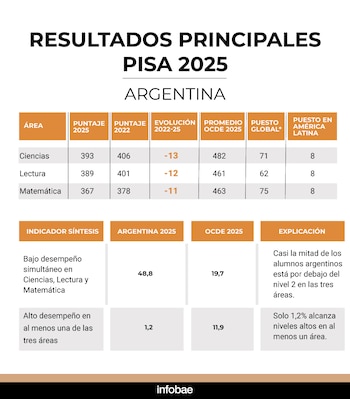
In the 2025 edition, the ninth since this international assessment was taken, Argentina obtained 393 points in Science, 389 in Reading and 367 in Mathematics. The three results were below those of PISA 2022 and you have to go back to 2006 to find lower figures in Science and Reading. In Mathematics, on the other hand, the country scored the worst score in its entire comparable historical series.
The drop was 13 points in Science (from 406 to 393), 12 points in Reading (from 401 to 389) and 11 points in Mathematics (from 378 to 367). In the ranking of the 91 participating education systems, Argentina was ranked 71st in Science, 62nd in Reading and 75th in Mathematics.
🔻 393 points in Science (-13 compared to 2022) — 71st place out of 91
🔻 389 points in Reading (-12 compared to 2022) — 62nd place out of 91
🔻 367 points in Mathematics (-11 compared to 2022) — 75th place out of 91, the worst in the historical series
Behind the general averages, an even more worrying picture appears when observing performance levels. In Mathematics, only 24% of Argentine students reached the basic level (level 2) or higher, compared to 65% of the OECD average; that is, three out of four adolescents fail to solve the minimum problems expected for their age. In Reading, 40% reached the basic level and in Science 41%, compared to 69% and 74% in the OECD respectively.
The most eloquent indicator combines the three subjects: 48.8% of Argentine 15-year-old students perform poorly in Science, Reading and Mathematics at the same time, almost triple the 19.7% observed in the OECD average. At the other extreme, only 1.2% of Argentine students achieve the highest levels of performance in any of the three areas, compared to 11.9% of the countries of the organization.
Compared to the rest of the region, Argentina remains in the bottom half of the table. Among the 13 Latin American countries that participated in PISA 2025, the country ranked eighth in the three subjects evaluated. Uruguay and Chile lead almost all the regional rankings, followed by Costa Rica, Colombia, Mexico, Brazil and Peru, which generally surpass Argentina.
|
Country |
Science |
Reading |
Mathematics |
|
Uruguay |
445 |
423 |
405 |
|
Chile |
442 |
436 |
403 |
|
Costa Rica |
424 |
416 |
387 |
|
Mexico |
414 |
408 |
388 |
|
Colombia |
414 |
399 |
381 |
|
Brazil |
409 |
408 |
377 |
|
Peru |
406 |
390 |
382 |
|
Argentina |
393 |
389 |
367 |
|
Ecuador |
393 |
s/d |
366 |
PISA 2025 scores by country in Latin America. Source: OECD / Argentines for Education.
Beyond the relative position, what worries specialists most is the speed of the setback: although most countries in the region stagnated or fell slightly between 2022 and 2025, Argentina is among those that worsened the most. In Mathematics, in fact, it registered the largest drop in the entire regional bloc, with 11 points less than in the previous edition. Only Costa Rica and El Salvador managed to avoid setbacks in the three areas evaluated.
Mathematics has been, for several editions, the weakest point of the Argentine education system, and in 2025 it deepened its deterioration. The proportion of students who reach at least the basic level has been falling steadily: it was 31% in 2018, fell to 27% in 2022 and now stands at 24%. At the highest levels of the scale (5 and 6) the Argentine presence is practically nil, while in the OECD it reaches 8% of students.
● 2018 → 31% of students reached the basic level
● 2022 → 27% reached the basic level
● 2025 → 24% reached the basic level (76% do not)
PISA 2025 also incorporated a computational problem-solving test, which measures the ability to use digital programming and modeling tools to solve new situations. Argentina obtained 403 points, well below the OECD average of 500, and was ninth among the 13 Latin American countries evaluated in this new competition.
The complementary questionnaires that accompany the test allow us to reconstruct the climate inside the classroom, and there Argentina exhibits several indicators above the international average. 55% of students said that their classmates are distracted by cell phones or other devices during most science classes, compared to 28% in the OECD; and only 37% attend schools where the use of cell phones is prohibited throughout the establishment, compared to 49% in the countries of the organization.
The disorder inside the classroom is also more marked: 58% of Argentine students said that noise interrupts most or all of the science classes, almost double the 31% recorded in the OECD, and 47% said that their classmates do not listen to the teacher. Unpunctuality was added to the list of problems: 66% of adolescents were late to school at least once in the two weeks prior to the test, ten points higher than the international average.
In the midst of this panorama, a favorable fact appears: the assessment of teachers by the students themselves. 78% of Argentine students consider that their science teacher is interested in everyone's learning, 73% that they continue to explain until the course understands and 79% that they offer extra help when necessary; all three percentages exceed the OECD average.
"The results of PISA 2025 confirm a trend that we cannot ignore," said Víctor Volman, executive director of Argentinos por la Educación, who remarked that the recent improvement in some indicators of Learning is not enough if there is not a sustained strategy throughout the school career, with a special focus on Mathematics.
— Víctor Volman, executive director of Argentines for Education
From a regional perspective, specialists in educational evaluation point out that reading is today the area that is regressing the most globally, and that Latin America faces this trend from already low learning levels, which deepens the gap with the best-performing education systems.
Argentina's collapse does not occur in isolation. The OECD report points out that PISA 2025 recorded the lowest average scores since the beginning of assessment in Science, Reading and Mathematics, although the behavior was not the same in the three subjects: while Science remained relatively stable in most education systems, the fall in Reading and Mathematics continued and deepened.
East Asian education systems were once again at the top of the ranking. Chinese provinces grouped as B-S-J-Z (Beijing, Shanghai, Jiangsu and Zhejiang) and Singapore topped the combined results of the three subjects, followed by Estonia, Japan, South Korea, Macau, Taipei and the United Kingdom.
Among the factors that the OECD itself mentions to explain the global deterioration are the decrease in reading for pleasure, changes in the digital habits of adolescents, persistent problems with school attendance and less family interaction around school life. The organization insists that learning loss is a long-term process that cannot be explained only by school closures during the pandemic.
PISA evaluates 15-year-old students in Science, Reading and Mathematics every three years, with a focus on the ability to apply knowledge to new situations and not on the mastery of specific curricular content. More than 760,000 students from 91 countries and economies participated in this edition, representing some 33 million adolescents worldwide. In Argentina, the sample included 11,093 students from 412 schools, representative of about 609,100 15-year-olds, and the test was administered in digital format, as in 2022.
|
Subject matter |
2006 |
2009 |
2012 |
2018 |
2022 |
2025 |
|
Science |
391 |
401 |
406 |
404 |
406 |
393 |
|
Reading |
374 |
s/d |
s/d |
402 |
401 |
389 |
|
Mathematics |
s/d |
s/d |
s/d |
s/d |
378 |
367 |
n.d.: No representative data available in this comparison. Source: OECD / Argentines for Education, report "How did Argentina fare in PISA 2025?".
🔗 La Nación — PISA 2025 tests: Argentina falls again in all subjects
🔗 Infobae — Argentina fell in reading, math and science: worst results since 2006
🔗 Minute One — Argentina obtained the worst result in 20 years
🔗 360 More News — Argentina fell again in all subjects
🔗 RosarioMix — The worst data since 2006
🔗 Mi Periódico — Argentina falls in all areas
🖼️ Reference images (absolute links)
As they are copyrighted material of each medium, the photographs are not embedded in this document; their source links are listed for consultation or licensing.
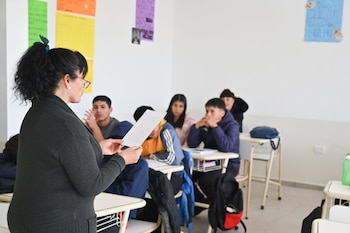
🔗 Student taking an exam in a classroom (Infobae)
🔗 Infographic: Argentina fell in the three areas evaluated (Infobae)
🔗 Public high school (Infobae)
POLITICAL AND ECONOMIC ANALYSIS · ARGENTINA
Milei's 1,000 days: the complete balance of a management that changed Argentina
A stabilized economy by dint of adjustment, reforms halfway through, open court cases, a geopolitical turn towards Washington and a relentless war with the unions: this is how the libertarian government reaches a symbolic milestone in its mandate.
|
✍️ Newsroom | 📅 September 6, 2026 |
⏱️ Estimated reading time: 11 minutes |
Javier Milei celebrated 1,000 days at the helm of the Casa Rosada this month, a symbolic milestone that led the country's main media and analysts to review in depth the effects of his administration. He came to power on December 10, 2023, promising a fiscal chainsaw and a "cultural battle" against the political caste; today, a little more than a year after seeking re-election in the 2027 legislative elections, he exhibits a more orderly but still convalescent economy, a Congress that approved structural reforms, although with concrete limits, a Justice that investigates his inner circle and a relationship with trade unionism that knows no truces.
The ruling party itself recognizes that the next stage will be decisive: in the Ministry of Finance they are betting on closing 2027 with monthly inflation close to zero, while the opposition and a large part of the union arc insist that the adjustment left social wounds still open. This report reconstructs, with official and private data, the five fronts that define the balance of these first thousand days: the macroeconomy, legislative reforms, judicial files, geopolitical rearrangement and the pulse with the unions.
Poverty: the data that divides waters
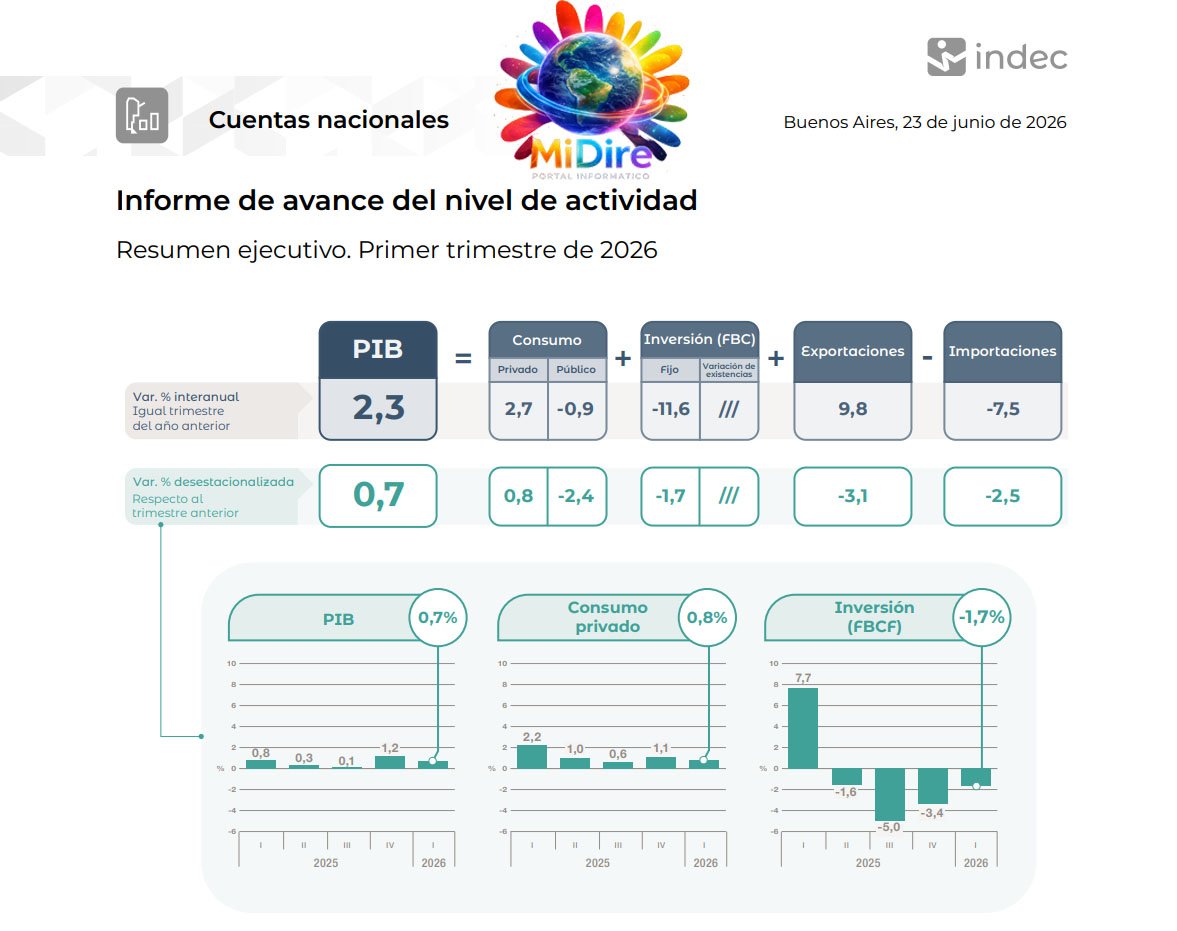
Poverty had an erratic behavior. It reached a peak of 52.9% in the first half of 2024 – the impact of the initial adjustment – and then fell to 28.2% in the second half of 2025, the lowest record since 2018. Indigence, meanwhile, went from 11.9% in the second half of 2023 to 6.3% in the same period of 2025. However, the official methodology for measuring poverty is the subject of questions from specialists
The unemployment rate climbed from 5.7% in the fourth quarter of 2023 to 7.8% in the first quarter of 2026. More than 30,000 companies closed in the last two and a half years, according to union and opposition sources. The minimum wage has lost 40.5% of its purchasing power since November 2023, according to the Interdisciplinary Institute of Political Economy of the UBA.
💰 1. The economy: the adjustment that changed the social thermometer
The economic result most cited by the government itself is the slowdown in inflation. Milei received an economy that was dragging an inertia of more than 200% annually and started his administration with a devaluation that shot up the price index to 25.5% per month in December 2023. According to the latest official data, corresponding to July 2026, the monthly increase stood at 2.1% and the year-on-year at 33.8%, while different private consultants project that August will have closed between 1.4% and 2%.
📌 Key fact
|
Indicator |
Dec 2023 |
Sept. 2026 |
|
Monthly inflation |
25,5 % |
≈ 2.1% |
|
Year-on-year inflation |
211,4 % |
33,8 % |
|
Country risk (EMBI) |
1,923 bp |
≈ 491 bp |
|
Official dollar (sale) |
≈ $820* |
≈ $1,529 |
|
Poverty |
41,7 % |
28,2 % |
|
Homelessness |
11,9 % |
6,3 % |
*Value of the official dollar immediately after the December 2023 devaluation. Sources: BCRA, INDEC, JP Morgan (EMBI+).
Country risk, which measures the markets' distrust of the Argentine State's ability to pay, plummeted from 1,923 basis points at the start of the administration to a range close to 491 points by the beginning of September 2026. At the same time, the government is holding a fiscal surplus unprecedented in more than a decade and a record of agro-industrial exports, while poverty fell from 41.7% to 28.2% of the population and indigence fell from 11.9% to 6.3%, according to the latest half-yearly measurement available from INDEC.
The exchange rate itself illustrates the reorganization: the official exchange rate went from $390 at the end of Alberto Fernández's government to $820 after the devaluation jump of December 2023, and today it stands at around $1,529. The Executive itself admits that the pending discussion is no longer whether there was stabilization, but how to transform it into sustained growth in wages, credit and activity.
📜 2. Reforms and Congress: what was approved and what fell by the wayside
In two years and nine months, Congress sanctioned 68 laws under the current administration, most of them promoted by the ruling party itself, although the pace was decreasing: 44 in 2024, 17 in 2025 and a significantly lower number so far in 2026. The Government maintains in force the mega DNU 70/2023, achieved a limited version of the Bases Law and advanced with a labor reform designed in agreement with business sectors and related unions.
✅ What he achieved
▸ Sustained validity of DNU 70/2023, the regulatory pillar of economic deregulation.
▸ Approval of a reduced version of the Bases Law, with delegated powers and benefits for large investments (RIGI).
▸ A limited labor reform, negotiated with unions and businessmen aligned with the ruling party.
▸ Specific agreements with Peronist governors and allies of the PRO and the Radicalism, supported by the distribution of funds.
❌ What he did not achieve
▸ The electoral reform, which did not gather the necessary votes in the chamber.
▸ The filling of the two vacancies in the Supreme Court: the lists of Ariel Lijo and Manuel García-Mansilla did not prosper.
▸ Prevent the parliamentary ratification of the university and emergency financing laws of the Garrahan Hospital, after the massive federal march of April 2024, items that the Executive chose not to execute.
⚖️ 3. The judicial front: Libra, Andis and an incomplete Supreme Court
The file that most eroded the presidential image is that of the crypto asset $LIBRA: in February 2025 Milei promoted a token in his X account that collapsed hours later and caused millions of dollars in losses to investors. Federal prosecutor Eduardo Taiano formally charged him with alleged abuse of authority, influence peddling, fraud and bribery, and ordered an expert examination of the phones of the President and his sister Karina. An investigative commission in the Chamber of Deputies described the episode as a planned operation and not an improvised event.
"The launch and promotion of $Libra was not improvised or accidental on the part of the president."
— Maximiliano Ferraro, deputy and former president of the investigative commission
In parallel, the scandal of the National Agency for Disability (Andis) – unleashed by leaked audios of former head Diego Spagnuolo, a friend and former personal lawyer of the President – investigates an alleged network of overpricing in the purchase of medicines, with Justice and Congress also pointing to Karina Milei. To this picture was added, between March and June 2026, the Manuel Adorni property scandal, pointed out by much of the press as the most damaging to the presidential image so far in the term.
At the institutional level, the Ministry of Justice – in charge of Juan Bautista Mahiques since 2026 – accelerated the appointment of 180 judges, prosecutors and defenders, reducing a large part of the subrogations in the federal courts of Comodoro Py. However, the government failed to fill the two vacancies on the Supreme Court, which continues to function with only three of the five members required by law, nor did it appoint an attorney general, a position that Eduardo Casal has held on an interim basis for almost a decade.
🌎 4. Geopolitics: alignment with Trump and the Falklands charter
Libertarian foreign policy was defined by an unconditional alignment with the United States, first with Joe Biden and then, more intensely, with Donald Trump. That link was decisive in September 2025, when the electoral defeat in the province of Buenos Aires led to a run on the exchange rate that was only contained after a financial assistance package from Washington, implemented through currency exchange mechanisms (swap). U.S. support was combined with defense gestures, such as the purchase of F-16 fighter jets, and with investment promotion missions such as the so-called "Argentina Week" in New York.
The episode with the greatest impact came in the first days of September 2026, when Trump admitted that his administration was reviewing the historic US position on the sovereignty of the Falkland Islands, traditionally aligned with the United Kingdom since the 1982 war. The news generated an immediate national broadcast of Milei, although diplomats consulted by the Argentine press warn that Trump's gesture would respond more to a dispute with British Prime Minister Keir Starmer on other geopolitical fronts – such as the Strait of Hormuz and NATO – than to a genuine turn in favor of the Argentine claim.
"Yesterday something very strong happened regarding the most important and sacred cause that we Argentines have"
— Javier Milei, in radio statements
Different analysts remark that the government seeks to capitalize electorally on this enthusiasm for 2027, presenting Argentina as a strategic actor in the South Atlantic and Antarctica in the framework of the global competition between power blocs.
🤝⚡ 5. Trade unions: the most belligerent relationship of the libertarian era
Few relations were as hostile as the one Milei built with the organized labor movement. CGT leaders maintain that, for the first time in democracy, a president decided to cut off all channels of formal dialogue with the CGT, which the government itself publicly describes as part of "the caste" to be overthrown in its cultural battle. That confrontation led to successive general strikes from the first months of the administration and a permanent legal dispute over the labor reform implemented by decree, questioned by different courts.
The tension deepened in 2026 with the official attempt to advance in a revision of the collective bargaining agreements, which also exposed an internal fracture within the CGT itself: a sector of more combative unions – including UTHGRA, the UTA, La Fraternidad, the UOM and ATE, grouped in the United Trade Union Front – is pushing for a 36-hour national strike and accuses the CGT leadership of excessive moderation. At the same time, another union sector, led by Luis Barrionuevo and allies of Carlos Acuña, maintained channels of dialogue with the ruling party from the very beginning of the administration, in what was informally known as Milei's "union leg".
🏛️ 6. The internal chessboard: Karina Milei and the allies who fell by the wayside
Inside the Casa Rosada, the map of power has also changed substantially in these thousand days. Karina Milei, secretary general of the Presidency and sister of the president, consolidated practically absolute control over the assembly of electoral lists, imposing herself on advisor Santiago Caputo after the 2025 legislative elections. In that same period, the relationship with Vice President Victoria Villarruel deteriorated sharply and the electoral partnership with former President Mauricio Macri was extinguished, two alliances that had been central to the start of the mandate.
🔮 7. What's next: what's at stake for Milei until 2027
With 415 days to go until the general elections of October 24, 2027, a good part of the official movements are already explained in electoral terms. The economic team led by Luis Caputo – who also completes 1,000 consecutive days at the helm of the Ministry of Finance – aims to reach the decisive stretch of 2027 with monthly inflation close to zero and tangible signs of improvement in activity, credit and income, without giving up the fiscal anchor that constitutes the heart of the libertarian program.
The ruling party itself admits that the discussion on the economic course is already settled in its favor in a large part of public opinion, but recognizes that the pending equation – how to transform the macroeconomic order into growth with social improvement – will be the one that finally determines whether these first 1,000 days were the foundation of a lasting transformation or just the first half of an unfinished process.
📚 SOURCES AND LINKS CONSULTED
🔗 Central de Noticias Madariaga — Javier Milei celebrates 1,000 days as president
🔗 Cholila Online — Milei's 1,000 Days: Between Reforms, Internal Disputes and Challenges
🔗 El Economista — Falkland Islands: Trump-UK Fight Opens Window for Argentina
🔗 Profile — Libra and Andis, Karina Milei's double judicial nightmare
🔗 El Economista — Libra Case escalates: opposition deputies denounce a "planned operation" by Milei
🔗 iProfesional — Javier Milei was charged for the $LIBRA scandal: how the case continues
🔗 iProfesional — Milei promotes a "total war" against the CGT
Note: for copyright reasons, this document does not reproduce photographs of agencies or media. Editorial images can be consulted by following the links to the sources cited above.
|
🇦🇷 🛢️ ⚓ MIDIRE.AR POLITICAL AND GEOPOLITICAL ANALYSIS Sanctions on the oil companies of Malvinas and the Integrated Naval Base: what Milei announced and what the national network scene left in the background A decree to accelerate sanctions in force since 2011, a DNU to finance the Ushuaia Integrated Naval Base and the shadow of the U.S. Southern Command over the South Atlantic 📅 September 4, 2026 ⏱️ Estimated reading time: 13 minutes ✍️ Editorial midire.ar |
On the night of September 3, President Javier Milei led a message on national television of about 15 minutes, surrounded by his entire cabinet, the head of the Chamber of Deputies, Martín Menem, and the Minister of Security, Patricia Bullrich. In this context, he announced three simultaneous measures: a decree to accelerate sanctions against oil companies operating in the Malvinas Islands without Argentine authorization, a Decree of Necessity and Urgency (DNU) to expand the funds of the Ministry of Defense destined to build an "integrated naval base" in Tierra del Fuego, and the sending to Congress of a draft "Law for the Defense of National Sovereignty" that creates a National Security Council.
President Javier Milei led the announcement accompanied by his entire cabinet.
The announcement combined, in the same discursive package, a legal tool that has existed for more than a decade with an infrastructure and financing decision that does represent a concrete novelty. That combination is what ran through the political reactions of the next day: while the ruling party presented it as an unprecedented hardening against the United Kingdom, a good part of the opposition and specialists in the Malvinas issue pointed out that the sanctions invoked were already in force, and that the real turning point is the Integrated Naval Base of Ushuaia and its link with the United States.
In his message, Milei maintained that the United Kingdom is in a position to extract oil from the subsoil of the Argentine Sea and affirmed that his government will not allow it. He also questioned the right of self-determination of the islanders and reaffirmed Argentina's historical claim to the archipelago.
|
❝ The Malvinas are Argentine by history and by right — Javier Milei, on national television |
The president announced that that same night he would sign a decree to "provide greater speed" to the sanctioning procedures imposed by Law 26,659 against those who participate in oil extraction initiatives in territory under British occupation. He specified that the focus is on the Sea Lion project, located in front of the Falklands and operated by the Israeli Navitas Petroleum and the British Rockhopper Exploration, which according to the Government plan to start offshore exploitation in the coming months on certified reserves of more than 1,300 million barrels.
According to the President himself, the Argentine Foreign Ministry had already sent about 180 notes of discouragement to companies and more than 29 countries linked to projects on the islands. The new sanctions aim to disqualify companies from operating in the Argentine mainland – and also their shareholders, directors, suppliers and financial advisors – that participate directly or indirectly in the unauthorized exploitation, and to expose them to lawsuits in absentia.
|
Measurement |
Instrument |
Core content |
|
Sanctions on oil companies |
Presidential decree |
Accelerates Law 26,659 proceedings against Sea Lion, its shareholders, directors and suppliers |
|
Integrated Naval Base |
DNU |
Expands Defense resources to build base in Tierra del Fuego and add telecommunications capabilities |
|
Law for the Defense of National Sovereignty |
Bill to Congress |
Toughens Law 26,659 and creates a National Security Council (Foreign Ministry, Defense, Intelligence, Economy) |
The fact that was most repeated by the technical and political questions to the announcement is that Law 26,659 is not a new law. It was unanimously sanctioned in 2011, promoted in the legislative debate by the filmmaker and then legislator Fernando "Pino" Solanas, and already contemplates disqualifications of up to 20 years and prison sentences of up to 15 years for those who explore or exploit hydrocarbons without Argentine authorization on the continental shelf, including the Malvinas. The law reaches not only extractive companies, but also shareholders, logistics service providers and technical or financial advisors.
The Argentine State itself had already applied that law in 2022, when it disqualified Navitas Petroleum for 20 years from operating in the country. Specialists and opposition leaders – including former Foreign Minister Jorge Taiana – remarked that exploration and exploitation activities in the Malvinas already had sanctions provided for in laws 26,659 and 26,915, and that the novelty of Milei's announcement consists of speeding up administrative procedures and expanding the universe of subjects reached, not in creating a non-existent tool.
The questioning of the timing also appeared strongly. The Buenos Aires Minister of Government, Carlos "Carli" Bianco, pointed out that 267 days have passed since Navitas and Rockhopper communicated, on December 10, 2025, their final decision to invest in Sea Lion, without the national government taking effective measures despite already having Law 26,659 as an available tool.
🏗️ The Naval Base as a Strategic "Cover-up"
However, the harshness of the discourse against the oil companies seems to be the smokescreen for a maneuver of greater significance: the consolidation of a U.S. military enclave in southern Argentina.
The announcement of the base comes just months after President Milei received the then head of the U.S. Southern Command, General Laura Richardson, in Ushuaia. That meeting, which Fuegian Governor Gustavo Melella refused to attend, had already sown suspicion about the true destination of the work. On that occasion, Milei defined the base as a "development port closer to Antarctica" to provide logistical support to cruise ships and scientific ships, but subsequent movements indicate a military purpose.
"Integration" with the U.S.
The adjective "integrated" in the name of the base is no coincidence. Opposition sources and legislators warn that Milei's government is negotiating the active participation of the United States in the infrastructure, something that the president himself denied, although his actions indicate otherwise.
The image of the sharp drop in the shares of the oil companies (Navitas and Rockhopper) contrasts with the discreet but accelerated planning of a base that, for critics, represents an unprecedented cession of sovereignty, hidden under nationalist rhetoric.
The Ushuaia Naval Base, in the southernmost tip of Tierra del Fuego, is the project that the government seeks to accelerate.
Unlike the sanctions, the Integrated Naval Base does represent an element with concrete and recent development. The project was not born with the current management: its antecedents date back to a study financed in 2011 with support from the Inter-American Development Bank (IDB) and an initiative presented in the Chamber of Deputies in 2016, which defined Ushuaia as a logistics platform for maritime control of the South Atlantic and support for Antarctic operations.
Effective construction began in 2022, during the administration of Alberto Fernández, with Jorge Taiana at the head of the Ministry of Defense; that year, budget funds were allocated for the dock and equipment, and the foundation stone was laid. With Milei's inauguration at the end of 2023, the budget adjustment ordered by the new government paralyzed a large part of these works.
In 2024, however, Milei traveled to Ushuaia with the then head of the U.S. Southern Command, General Laura Richardson, and presented the base as part of bilateral strategic cooperation, although at that time there were no concrete definitions on U.S. financing. In 2025 it was the turn of Richardson's successor at the head of that force, Admiral Alvin Holsey, who also visited the Ushuaia facilities. During 2026, the government sought to advance a technical and financial agreement with Washington, without there being, until the September 3 announcement, a formally closed financing.
The geographical relevance of Ushuaia – some 1,000 kilometers from the Antarctic Peninsula and on the Drake Passage and the Strait of Magellan – explains why the project arouses interest beyond the dispute over the Malvinas. For Washington, Argentina's extreme south has strategic value due to its projection towards Antarctica, interoceanic maritime routes and as a possible counterweight to the Chinese presence in the region, in particular to the space station installed in Neuquén, which U.S. defense agencies have been monitoring for years.
In this context, the government's decision to rule out the development of port infrastructure in Río Grande with the eventual participation of Chinese capital is also inscribed, a possibility that had generated concern in the United States due to the location of Tierra del Fuego in front of the South Atlantic and its projection towards the white continent. Milei's foreign policy maintained, from the beginning of his administration, a priority alignment with Washington and the rejection of Chinese presence in infrastructure considered sensitive.
Platforms such as the Sea Lion project are the focus of the new sanctions announced by the government.
The presidential announcement itself acknowledged that the DNU seeks to "expand" Defense resources "with the priority purpose" of building the base and increasing the country's telecommunications capabilities, and that the facility will turn Tierra del Fuego into the "most important logistics hub in the South Atlantic." Some media that covered the announcement directly linked the work to U.S. financing, while others remarked that it is an expansion of national funds without there being, so far, a formalized international agreement.
The Ministry of Defense had previously informed Congress that there is no agreement with the United States to build a joint base, that Washington did not provide materials or funds and that there are no plans to cede land or buildings; according to that official response, the project is of "execution and exclusive control of the Argentine State." In the same vein, Foreign Minister Pablo Quirno assured in radio statements that the future facility "will be a completely Argentine base," although he acknowledged that the country today has fiscal space to face the investment without altering the balance of public accounts.
Faced with these official definitions, sectors of the opposition maintain a different reading: they accuse Milei of having offered to share the future base of Ushuaia with the administration of Donald Trump, within the framework of what they consider a broader strategic alignment with the United States and Israel, the two countries that the President himself identifies as his main foreign policy allies. The presidential spokesman himself, Manuel Adorni, had defined the project at the time as a joint initiative framed in the integration of Argentina into the "Western and developed world," although he clarified on that same occasion that there were no concrete definitions on the financial contribution of the United States.
The contrast between the two versions – a "completely Argentine" base according to the government, and a project with a US imprint according to part of the opposition – is, strictly speaking, the core of the public discussion that opened up after the September 3 message, beyond the chapter on oil sanctions.
Within La Libertad Avanza, Minister Patricia Bullrich celebrated the announcements as a defense of sovereignty "with facts." Malvinas veterans also supported the measures and asked to participate in the legislative debate on the reform of Law 26,659.
From the opposition, the criticism was concentrated on two axes. The first, legal: Jorge Taiana and other leaders stressed that the sanctions were already provided for in the legislation in force for more than a decade and that a good part of the announced package does not innovate on that point. The second, historic: Taiana himself recalled that the construction of the Ushuaia Integrated Naval Base began in 2022 during his tenure as head of Defense, with a different objective than the one Milei is now proposing, and that it was the current administration that stopped these works when he took office.
|
❝ It took 267 days for Thatcher's fan to comply with the law — Carlos "Carli" Bianco, Buenos Aires Minister of Government |
Former Foreign Minister Santiago Cafiero said that Milei "had to back down" and resume the diplomatic work of previous administrations. Deputy Victoria Tolosa Paz ironically questioned the discursive turn of the President, who knew how to publicly vindicate Margaret Thatcher, and accused him of opportunism. Other opposition leaders were harsher: they spoke of an attempt to "galtierize" the presidential figure – in reference to the last president of the military dictatorship, who declared war on the United Kingdom over the islands in 1982 – and warned about the risks of using the Malvinas cause to create a National Security Council in terms of military cooperation with Washington.
The use of the State's regulatory and sanctioning apparatus to restrict the activity of private companies contrasts with the discourse of deregulation and reduction of the State that characterized the Government since December 2023, a point that different journalistic analyses pointed out as one of the most visible paradoxes of the announcement: one of the main tools recovered by the Executive – Law 26,659 – was sanctioned during a political stage that Milei turned into one of his main discursive adversaries.
The Falkland Islands, at the center of the sovereignty dispute reactivated by the presidential announcement.
The Argentine announcement generated a response from the United Kingdom, which maintains its historical position on the administration of the archipelago and the right to self-determination of its inhabitants, a principle that Milei directly questioned in his speech. The Sea Lion project, at the center of the new sanctions, is pointed out by the Argentine government as the initiative that motivated the acceleration of the package of measures, given the imminence that its operators will move forward with offshore exploitation.
In Chile, the Ministry of Defense has been following the Ushuaia project with public attention since the beginning of 2026, as part of parliamentary consultations on a possible U.S. participation in port infrastructure at the southern tip of the continent, both in the Pacific and the Atlantic. The Chilean authorities have so far ruled out that the project generates a formal alarm, although they acknowledged that the issue is closely monitored due to its relationship with access to Antarctica and with the revision of the Antarctic Treaty scheduled for 2048.
Read as a whole, the message of September 3 combined an announcement of high communicational impact – "new" sanctions on companies operating in the Malvinas – with a substantive decision that had remained relatively in the background of information until then: the reactivation, with expanded funds, of a military infrastructure project that had been stopped since the beginning of Milei's administration and that today advances in parallel to an increasingly close rapprochement with the United States Southern Command.
This asymmetry is precisely what fueled the critical readings: if the sanctions invoked had already been in force since 2011 and the State had already applied them in 2022, much of the "new" news load of the announcement falls on the Integrated Naval Base and the DNU that expands its funds, a chapter with more far-reaching geopolitical implications – link with Washington, position vis-à-vis China, Antarctic projection – than the oil sanctions alone. The government, for its part, insists that it is an exclusively Argentine project and denies the existence of a formal agreement with the United States.
Neither of the two readings is incompatible with the verifiable facts as of the closing of this note: it is true that Law 26,659 pre-exists the announcement, it is true that the Ushuaia work was stopped by Milei's own government between 2023 and 2024, and it is also true that, according to the official information available, there is no closed international agreement that turns the base into a binational project. What the episode leaves in question – and what is expected to mark the legislative discussion to come, both of the reform of Law 26,659 and of the draft Law for the Defense of National Sovereignty – is to what extent the reactivation of the Integrated Naval Base, within the framework of a strategic realignment with the United States, ends up weighing more heavily in the long term than the sanctioning chapter that made the headlines of the day.
🧭 Future Implications
Milei's government presented a draft Law for the Defense of National Sovereignty that includes the creation of a National Security Council. This seeks to articulate Defense, Economy and Intelligence to protect "critical infrastructure." However, ambiguity persists: Will Argentina protect its sovereignty or will it be the shield for a foreign presence?
While the United Kingdom reiterates its "unwavering commitment" to the islanders, Milei's strategy seems to bet that Washington's favor, in exchange for a strategic military base, will deter London in the energy dispute. Sea Lion, which plans to extract oil 220 km from the islands, has become the trigger, but the naval base in Tierra del Fuego is the real long-term bet.
🔍 Conclusion
Milei's announcement is a classic example of modern geopolitics: a discourse of hard sovereignty against foreign interests (British and Israeli oil companies) that hides a tactical move of strategic alignment with the United States. The Ushuaia naval base, a stalled and forgotten project, is now reemerging as the center of a new bilateral relationship that could redefine the balance of power in the South Atlantic. On the chessboard, sanctions are the piece that moves in plain sight, but the basis is the move that really defines the game.
▸ What did Javier Milei announce about the Malvinas oil companies?
A decree to accelerate the sanctions of Law 26,659 against companies that exploit hydrocarbons in the Malvinas Islands without Argentine authorization, with a focus on the Sea Lion project, operated by Navitas Petroleum and Rockhopper Exploration.
▸ Is Law 26,659 a new law?
No. It was unanimously sanctioned in 2011 and already provided for disqualifications of up to 20 years and sentences of up to 15 years in prison. The Argentine State had already applied it in 2022 against Navitas Petroleum.
▸ What is the Ushuaia Integrated Naval Base?
A military infrastructure and logistics project in Tierra del Fuego, with antecedents since 2011 and works started in 2022, designed as a control platform for the South Atlantic and support for Antarctic operations.
▸ Does the United States finance the Integrated Naval Base?
According to the Argentine Ministry of Defense, there is no formal agreement with the United States for a joint base or contributions of U.S. materials or funds. The project is advancing in parallel with visits by Southern Command chiefs and a diplomatic rapprochement with Washington.
▸ Why did the opposition question the announcement?
Because he considers that the sanctions had already been in place for more than a decade and that it was Milei's own government that paralyzed the construction of the naval base when he took office in 2023.
▸ What other measures did Milei announce along with the sanctions?
A DNU to expand Defense funds for the naval base and telecommunications, and a bill that creates a National Security Council made up of the Ministry of Foreign Affairs, Defense, Intelligence and Economy.
🔍 Sources and References
Note prepared with information from journalistic and official sources available until September 4, 2026. The status of financing and the eventual international agreement for the Integrated Naval Base may be modified in the coming weeks as the Government formalizes the DNU and Congress debates the reform of Law 26,659.

|
🏛️ UNIVERSITY CONFLICT The joint meeting failed: University teachers' unions go on national strike The Government offered 3% and the unions rejected it; Human Capital Ordered Not to Stop midire.ar · News and analysis · September 2, 2026 |
TENSION IN PUBLIC UNIVERSITIES
University conflict: the parity failed and the teachers' unions go on national strike
The national government offered a 3% recomposition for September; the unions described it as "unacceptable" and called for a 24-hour strike. Human Capital warned the unions not to affect the teaching of classes.
📅 September 2, 2026 🕒 Reading Time: 6 minutes 📰 Section: Education/Politics
The joint meeting between the national government and the teaching and non-teaching unions of public universities ended on Tuesday, September 1, without an agreement. The meeting, convened by the Ministry of Human Capital within the framework of the salary negotiation provided for by the University Financing Law, failed to unblock the salary dispute that has been going through the university system for months.
After the failure of the dialogue, the main union federations – Conadu, Conadu Histórica and Fedun, among others – resolved a 24-hour strike with a national scope for this Wednesday, September 2. In different provinces, grassroots unions such as Adicus and SiDUNSJ (San Juan) adhered to the call.
🖼️ See image: Faculty of Law, University of Buenos Aires (UBA)
Fuente: Wikimedia Commons
According to the union representatives, the Executive Branch presented at the negotiating table a proposal for a 3% increase for September salaries, to which was added another 3% already committed in June for the month of October. The portfolio led by Sandra Pettovello maintained that, in this way, the consolidated offer reaches 6% bimonthly for the teaching staff of national universities.
The unions, however, stressed that the October tranche had already been agreed in a previous parity agreement, so they consider that the only effectively new improvement is the 3% of September. For the federations, that figure is far from compensating for the accumulated salary loss.
|
❝ The parity has remained inconclusive. The formal offer by the national government was for a 3% increase in the salaries of university teachers. — Emiliano Cagnasi, Secretary General of ADUBA and representative of Fedun |
The Association of Teachers of the UBA (ADUBA) described the official proposal as "unacceptable" and described the meeting as a "monologue" on the part of the authorities. Clara Chevalier, general secretary of Conadu, pointed out that the unions brought their entire parity agenda to the table, while the government limited itself to repeating the 3 percent offer.
|
Concept |
Reclamo gremial |
Official offer |
|
Salary recomposition |
31.2% due as of July |
3% for September |
|
Legal framework invoked |
University Financing Law (27.795) |
Budget availability |
|
Cumulative increase cited |
Loss of more than 30% |
6% bimestral (Sept.–Oct.) |
|
Next instance |
Continuity of the plan of struggle |
Meeting called for 9/17 |
The salary conflict is crossed by a long judicial litigation. Federal Judge Martín Cormick had granted a precautionary measure that orders the Executive Branch to comply "immediately" with articles 5 and 6 of Law 27,795, on the Financing of University Education and Recomposition of Teacher Salaries, which establish the updating of teaching and non-teaching salaries and student scholarships with reference to inflation from December 2023.
On June 25, 2026, the Supreme Court of Justice of the Nation – signed by Horacio Rosatti, Carlos Rosenkrantz and Ricardo Lorenzetti – unanimously rejected the extraordinary appeal of the national State and left that precautionary measure firm, although the resolution did not generate an immediate salary impact on itself because the substantive case is still pending. According to the unions, the Government has accumulated more than two months of non-compliance with that ruling.
Oscar Vallejos, assistant secretary of CONADU Histórica and secretary of Training of the CTA, said that the Executive convenes the paritarias "for the sole purpose of gaining time in Justice," in reference to the three-day period that Judge Cormick gave the Government to report on compliance with the law.
Faced with the confirmation of the strike, the Ministry of Human Capital came out to urge the union organizations to desist from the measure and urged not to alter the normal teaching of classes in national universities. Despite the official claim, the unions ratified their decision to strike this Wednesday, despite the injunction of the national portfolio.
|
❝ The Government creates this joint body for the sole purpose of gaining time in Justice. — Oscar Vallejos, Assistant Secretary of CONADU Histórica |
The official statement itself confirmed, however, that there will be a new instance of dialogue: the Undersecretary of University Policies called for the resumption of negotiations on Thursday, September 17, with the aim of giving continuity to the parity process. The unions have not yet confirmed whether they will attend that meeting.
● 24-hour national strike in public universities throughout the country, with the adhesion of Conadu, Conadu Histórica, Fedun and provincial grassroots unions.
● On Thursday, September 3, the plenary session of the National Interuniversity Council (CIN) will be held, where the authorities of the universities will define the next steps.
● Human Capital maintains the call to resume the parity negotiation on September 17.
● The unions warn that, if there is no progress, the plan of struggle could be deepened with new measures of force.
The university conflict adds to a broader scenario of tension between the national government and different union sectors over the wage bid in the face of inflation. The combination of a firm court ruling that demands the updating of salaries and scholarships, an official offer that the unions consider insufficient, and a plan of struggle that already includes a new strike, anticipates that the negotiation in mid-September will be decisive for the course of the conflict.
Meanwhile, uncertainty about the teaching of classes and the demand for compliance with the University Financing Law will continue to mark the agenda of Argentine public universities in the coming weeks.
🖼️ See image: Casa Rosada, seat of the national Executive Branch
Fuente: Wikimedia Commons
❓ Why did the university parity fail?
Because the government offered a 3% increase for September (plus another 3% already agreed for October) and the unions considered it insufficient in the face of a demand for recomposition close to 31.2%.
❓ When is the university teaching strike?
The 24-hour national strike was called for Wednesday, September 2, 2026 in public universities throughout the country.
❓ What did the Government ask of the unions?
The Ministry of Human Capital ordered the unions to desist from the strike and not to affect the normal teaching of classes, although the unions ratified the strike.
❓ What does the University Financing Law establish?
Law 27,795 provides for the updating of teaching and non-teaching salaries and student scholarships with reference to inflation from December 2023; a judicial precautionary measure, ratified by the Supreme Court on June 25, 2026, requires immediate compliance.
❓ Will there be a new joint meeting?
Yes, the Government called for the resumption of negotiations on Thursday, September 17, 2026.
University teachers' strike 2026: the parity failed
The university teaching parity failed: the government offered 3% and the unions called a national strike for 9/2. Human Capital warned not to stop.
/university-conflict-paritary-failure-national-strike-teachers
Document generated in 0.01 second



.jpg)
