MIDIRE.AR
LEGISLATIVE POLICY · ARGENTINA 2026
⚖️
Backtracking on the Land Law
The national government backed down with the modifications proposed by the Rural Land Law, a hard legislative setback within the official reforms on private property
🕒 Estimated reading time: 8 minutes
📅 August 8, 2026
✍️ Editorial midire.ar
The ruling party had to give in to allied governors and social rejection in order to move forward with the rest of its package of reforms on private property.
The national government backtracked on one of the most resisted points of its reform agenda: the modification of the Rural Land Law. After weeks of negotiation and given the lack of votes of its own in the Senate, La Libertad Avanza decided to remove from the bill of Inviolability of Private Property the chapter that relaxed the current restrictions on the purchase of rural land by foreigners. The decision, confirmed on Wednesday, August 5, represented a new concession by the ruling party and the second chapter that it had to resign since the entry of the initiative into Congress, after having also withdrawn, during the debate in commissions, the elimination of the National Registry of Popular Neighborhoods (Renabap).
Hours later, at the end of a marathon session of almost twelve hours, the ruling bloc also had to sacrifice the chapter that modified the Fire Management Law, due to the lack of sufficient support. Only then, after 1:40 a.m. on Friday, did the Senate give half sanction to the rest of the bill by 37 votes in favor and 33 against, with no abstentions.
The reform promoted by the Minister of Deregulation and Transformation of the State, Federico Sturzenegger, proposed to modify Law 26,737, the Regime for the Protection of the National Domain over the Ownership, Possession or Tenure of Rural Lands, sanctioned in 2011. The official project sought to raise from 15% to 25% the limit of foreign ownership over productive rural lands per district, making more flexible a scheme that until now limited the foreignization of Argentine agricultural land.
The initiative generated a cross-cutting rejection: environmental, social, political and agricultural sector organizations warned about the finite and irrecoverable nature of the land once sold, and questioned that the reform did not contemplate concrete advantages for local producers. That resistance was joined by that of allied governors and pro-dialogue sectors, who on other occasions had accompanied projects of the Executive but this time conditioned their support.
Before the chapter fell definitively, the head of the bloc of senators of La Libertad Avanza, Patricia Bullrich, had tried to unblock the resistance by presenting a modified ruling that incorporated explicit limits for foreign states, in an attempt to differentiate the purchase of land by foreign private parties from that of foreign governments.
"Foreign states cannot buy a meter of rural land in Argentina, period"
— Patricia Bullrich, head of the LLA bloc in the Senate (La Nación)
The seat count ended up being the deciding factor. Several senators from allied blocs, including legislators linked to provincial governors, spoke out against increasing the percentage of foreignization, making it clear that La Libertad Avanza did not have the necessary support to sustain the reform in the chamber.
To this legislative pressure was added social mobilization. Environmental, trade union and popular economy organizations called for a march in front of the Congress, in the Plaza de los Dos Congresos, to which artists and public leaders adhered. The proximity of that protest ended up inclining several senators to reject the chapter, according to different coverage of the parliamentary debate.
● Rejection of allied governors who conditioned their support on the withdrawal of the chapter.
● Social mobilization called in front of Congress for the key session.
● Absence of arguments that would convince the dialoguist blocs about the need for reform.
● Recent precedent: the government backtracked on a decree that had generated another political conflict days earlier.
"This is basically a very hard setback for the government"
— Javier Preciado Patiño, agribusiness consultant (Canal E / Perfil)
Although it lost two of its most resisted chapters, the project retained the core of the reform that the Executive considered a priority: changes in evictions, expropriations and property regularization. The following table summarizes the final state of each chapter after the session of August 6 and 7.
|
Project chapter |
Original content |
Final state |
|
Chapter III — Rural Land Law (26.737) |
It raised the limit of foreign ownership of rural land from 15% to 25% |
Withdrawn before the session |
|
Chapter IV — Fire Management Law |
It eased restrictions on fire-affected surfaces |
Withdrawn on the closing of the debate |
|
Express evictions |
Summary procedure and electronic notification to return real estate |
Approved with half sanction |
|
Expropriation regime |
Toughens conditions and deadlines for expropriating real estate |
Approved with half sanction |
|
Real Estate Registry |
Modernization and new requirements for property regularization |
Approved with half sanction |
The process that led to the cut half sanction lasted for almost five months, with successive postponements and a three-week intermission before the final vote.
|
Date |
Fact |
|
26 Mar. 2026 |
The Executive Branch sends to the Senate the bill on the Inviolability of Private Property, with the chapter on Rural Lands included. |
|
16 Jul. 2026 |
The Senate opens the session and goes to the intermission room due to the lack of agreements. |
|
Aug 5. 2026 |
La Libertad Avanza formally withdraws the chapter on Rural Lands due to the lack of votes and pressure from allied governors. |
|
Aug. 6-7. 2026 |
After almost twelve hours of debate and with mobilizations in front of Congress, the ruling party also withdraws the chapter on Fire Management. The Senate gives half sanction to the rest of the bill by 37 votes to 33. |
|
Next step |
The cut bill goes to the Chamber of Deputies to continue its legislative process. |
The day of August 6 was marked by strong disturbances in the vicinity of Congress, where federal security forces used hydrant trucks during the march called in rejection of the project. Inside the chamber, an opposition motion to return the initiative to committee was rejected by 38 votes to 31, which anticipated that the ruling party would achieve the half sanction in general.
After almost twelve hours of debate, the Senate approved the bill by 37 affirmative votes against 33 negative, with no abstentions. The vote in particular, chapter by chapter, incorporated additional modifications in several articles before the initiative was in a position to be sent to the Chamber of Deputies.
With half the approval of the Senate, the bill for the Inviolability of Private Property – now without the chapters on Rural Lands and Fire Management – now goes to the Chamber of Deputies, where it will have to go through a new debate in commissions and in the chamber to become law. The current chapters that reach the Lower House include the tightening of the conditions for expropriations, the acceleration of eviction processes and the modernization of the Real Property Registry.
The result left, according to different political analyses, a relevant precedent for future legislative negotiations: the capacity for social mobilization and the resistance of the provincial blocs managed to twist one of the most ambitious reforms of the deregulation package promoted by the economic team.
❓ What is the Rural Land Law that the Government sought to modify?
It is Law 26,737, passed in 2011, which establishes a regime of protection over the ownership, possession and tenure of rural lands, setting limits on the ownership of foreigners over Argentine productive land.
❓ Why did the Government withdraw the reform of the Land Law?
Due to lack of their own votes in the Senate: allied governors and dialogue blocs rejected extending the limit of land in foreign hands, in a context of strong social mobilization against the initiative.
❓ What other chapters fell out of the Inviolability of Private Property project?
In addition to the Land Law, the ruling party had to withdraw at the end of the debate the chapter that modified the Fire Management Law, due to the lack of sufficient support in the chamber.
❓ Which parts of the bill did get half a sanction?
The Senate approved by 37 votes to 33 the chapters on express evictions, toughening the expropriation regime and modernization of the Real Property Registry.
❓ What happens now with the project?
It goes to the Chamber of Deputies, where it must be approved in committees and in the chamber to become a final law.
— END OF ARTICLE —
The drastic decision of Luiz Inácio Lula da Silva to downgrade the relationship with Buenos Aires to the rank of chargé d'affaires sets off alarms in the manufacturing plants. Beyond the political uproar, the real economy operates under a precise gear: Brazil is the absolute buyer of 61.7% of the Manufactures of Industrial Origin (MOI) that Argentina ships to the world. [1, 2]
While corporations and terminals operate through private channels that diplomacy does not destroy overnight, the freezing of the political channel introduces a dangerous "bureaucratic tax." The absence of a top-level interlocutor slows down the resolution of non-tariff barriers and slows down key flows just in a year when bilateral trade had been showing its greatest dynamism in more than a decade. [1]
📈 1. The X-ray of Bilateral Industrial Trade
To measure the exact impact, it is necessary to review the official figures consolidated by INDEC. Of the US$49,454 million that Argentina exported globally in the first half of the year, US$6,255 million (12.6%) were destined for the Brazilian market. [1]
The enormous difference with other partners lies in the quality of this trade: while raw materials are sold to China, industrial added value is exported to Brazil. Manufactures of Industrial Origin (MOI) comfortably lead shipments to the Mercosur partner: [1, 2]
📊 Composition of Argentine Exports to Brazil (First Semester)
┌─────────────────────────────────────────────────────────┐
│ [██████████████████████████████████░░░░░░░] 61.7% MOI │
└─────────────────────────────────────────────────────────┘
(Manufactures of Industrial Origin: Autos, auto parts, chemicals)
🚗 The Hard Core: The Automotive and Transportation Complex
Heavy and integrated industries absorb most of the foreign exchange flow. According to the Observatory of Economic Complexity (OEC), the items with the highest monthly turnover to Brazil are:
🛑 2. The Risks of the "Bureaucratic Brake" without an Ambassador
The exact trade impact will not be reflected in a direct tariff (prohibited by Mercosur rules), but in the tightening of non-tariff barriers. A chargé d'affaires lacks the direct access to the Head of State or the ministers of the Planalto that a career ambassador has. [1]
In the practice of foreign trade, the lack of fine political harmony translates into three critical fronts:
⚖️ 3. The Private Sector Counterweight
Despite the institutional degradation, international trade analysts point out that the interdependence of private companies acts as a containment cushion.
SOCIETY · WEATHER IN ARGENTINA
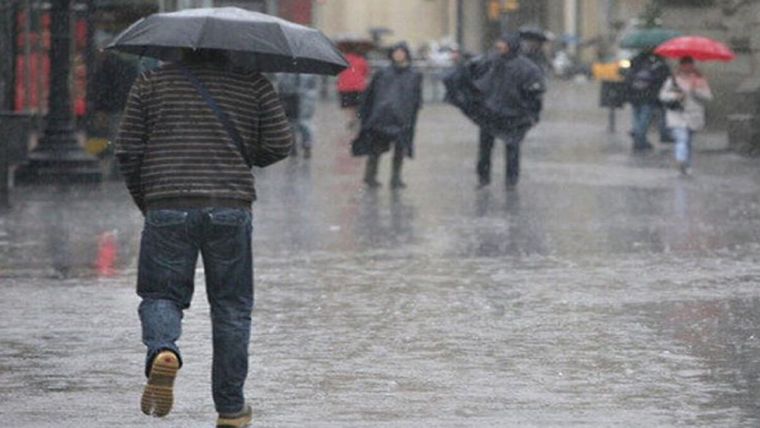
The National Meteorological Service extended warnings for severe storms, hail, gusts and snowfall to much of the territory, while the storm is already causing flooded streets and delays in the AMBA.
🖊️ Editorial team · 📅 August 1, 2026 · 🕒 4 min read
|
⛈️ 🌧️ 🧊 💨 ❄️ Storms, hail and gusts affect the center and north of the country, with snow in Patagonia |
A bad weather front is keeping much of Argentina on tenterhooks this Saturday. The National Meteorological Service (SMN) maintains orange and yellow level warnings that reach more than a dozen provinces, with locally severe storms, hail, intense gusts and snowfall in the south of the country.
The most critical conditions are concentrated in the northeast of the province of Buenos Aires, the south and southeast of Santa Fe, Entre Ríos and Corrientes. There, the SMN predicts locally severe storms, with abundant falling water in short periods, intense electrical activity and gusts capable of causing material damage and complicating circulation.
In the areas under orange warning, accumulated temperatures of between 60 and 90 millimeters are expected throughout the alert period, a volume that in some points could be exceeded. In the sectors with yellow alert, on the other hand, the forecast is around 30 to 50 millimeters, also with the possibility of hail and frequent electrical discharges.
In the AMBA, the rains have already generated flooded streets and delays in transportation during the early hours of Saturday. The agency estimates that the instability will last for a good part of the weekend, so new episodes of intense rain are not ruled out.
|
LEVEL |
PROVINCES / ZONES |
PHENOMENA |
|
🟧 ORANGE |
CABA and AMBA, central-east of Buenos Aires, south of Entre Ríos, southeast of Santa Fe, Corrientes and northeast/west of Córdoba |
Locally severe storms, hail, gusts +100 km/h, 60–90 mm |
|
🟨 YELLOW (storms) |
Rest of Buenos Aires, Chaco, Santiago del Estero, La Pampa and north of Corrientes |
Storms of varying intensity, 30–50 mm, occasional hail |
|
🟨 YELLOW (wind) |
Jujuy, Salta, Tucumán, Catamarca, La Rioja, San Juan, Mendoza, north of San Luis, Neuquén and Río Negro |
West wind 40–80 km/h, gusts +100 km/h, Zonda in Jujuy |
|
❄️ SNOW / COLD |
Chubut and Santa Cruz (snowfall); west of Santa Cruz on red alert for extreme cold; Tierra del Fuego in yellow |
Accumulated from 10 to 40 cm, white wind, very low thermal sensation |
While the center and northeast of the country face storms, Chubut and Santa Cruz register alerts for persistent snowfall, with expected accumulations of between 20 and 40 centimeters in mountain areas and 10 to 30 centimeters in lower sectors, in addition to the risk of white wind. The west of Santa Cruz, for its part, was under red alert for extreme cold, the highest level on the scale, while Tierra del Fuego remains on yellow alert.
|
⚠️ According to the SMN scale, the orange level warns of phenomena with the capacity to harm the population, property and the environment; yellow signals events that can disrupt daily activities. |
🏠 Stay in closed buildings and avoid displacements that are not essential.
🚗 Do not drive on flooded streets or try to cross flood zones, on foot or by vehicle.
🔌 Cut off the electricity supply if water enters the house and avoid contact with connected appliances.
🪟 Stay away from doors, windows, canopies, trees, and structures that may be blown off by the wind.
🎒 Have an emergency kit on hand: drinking water, non-perishable food, flashlight, battery-powered radio, first aid kit, and a charged cell phone.
The SMN anticipates a progressive improvement as the cold front finishes crossing the region: the rains will lose intensity during Saturday morning and the rest of the day will have a low probability of new rainfall, although with mostly cloudy skies. For Sunday, a more stable day is expected, without rain, but with a marked thermal drop: minimums close to 10 degrees and maximums of around 15 degrees in the AMBA.
🔗 MDZ Online — Orange alert for storms in the AMBA and 18 provinces
🔗 Cadena 3 — Orange and yellow alert for storms in six provinces
🔗 La Nación — Red, orange and yellow alert for cold, storms and Zonda
🔗 Financial Sphere — Orange alert for severe storms, hail and gusts
🔗 Profile — The SMN keeps the AMBA and several provinces on orange alert
📷 Reference image (credit: MDZ Online — external link, not incorporated by copyright)
INTERNATIONAL POLITICS · ARGENTINA-BRAZIL DIPLOMATIC CRISIS · JULY 29, 2026
The PT denounces Javier Milei before the Electoral Justice of Brazil for "undue external interference"
Deputies of the Workers' Party, together with the Green Party and the PCdoB, formalized a presentation to the Electoral Attorney General's Office to determine if the participation of the Argentine president in the convention that proclaimed Flávio Bolsonaro as a candidate constituted an undue interference in the Brazilian electoral process. The file points, above all, to a question: who paid for the trip.
|
🗓️ July 29, 2026 ⏱️ Reading time: 8 min ✍️ Global News |
The diplomatic crisis between Argentina and Brazil, unleashed by President Javier Milei's insults against his counterpart Luiz Inácio Lula da Silva, took a leap in scale on Monday: it ceased to be an exclusively political conflict to become a judicial case. Deputies from the Workers' Party (PT), the space led by Lula, formalized a complaint with the Electoral Attorney General's Office of Brazil, accompanied by their allies from the Green Party (PV) and the Communist Party of Brazil (PCdoB), grouped in the Brazilian Federation of Hope.
The objective of the presentation is for the electoral justice to determine if Milei's presence at the National Convention of the Liberal Party (PL), where the presidential candidacy of Senator Flávio Bolsonaro was made official on Saturday, constituted a case of "undue external interference" in the face of the October 4 elections. The ruling coalition clarified that its claim does not advance "any conclusion about irregularities," but seeks to clarify whether the visit affected sovereignty, the equality of conditions between the candidates and the normality of the electoral process.
|
"Milei's presence at the party event did not constitute an isolated episode or a merely accessory participation." — Complaint filed by the PT with the Electoral Attorney General's Office of Brazil |
The brief, filed with the Electoral Public Prosecutor's Office through the Electoral Attorney General's Office, requests an investigation into the event organized by the Liberal Party — led by Valdemar Costa Neto and Flávio Bolsonaro — with the institutional participation of the governor of São Paulo, Tarcísio de Freitas. The PT lawyers ask to reconstruct the legal nature of Milei's visit and determine if there was coordination between Brazilian officials, foreign authorities and the PL to set up the agenda.
The document also questions the previous ceremony in which De Freitas decorated Milei with the Order of Ipiranga, the highest distinction of the São Paulo state, hours before the Argentine president took the stage of the party convention. For the signatories, using an official act as a prelude to a campaign launch could violate the principles of impersonality and morality that govern the Brazilian public administration.
The conflict began on Saturday, when Milei led a speech of about 25 minutes before Bolsonarist militants gathered at the Pacaembú stadium in São Paulo. Without ever mentioning him by his first name, the Argentine president referred to Lula da Silva as "the lefty," "the thief" and "the convict," and warned of an alleged "Lula risk" for the Brazilian economy. He also took aim at Supreme Court Justice Alexandre de Moraes — whom he called "bald trash" — after the magistrate restricted a visit to Jair Bolsonaro, sentenced to 27 years of house arrest for the 2023 coup attempt.
According to the Argentine press, Milei was accompanied on stage by Foreign Minister Pablo Quirno and the Argentine consul in São Paulo, Luis Kreckler, whose institutional presence at a party event was objected to by Brazilian diplomacy. Asked by journalists about Milei's statements, Lula opted for irony and avoided answering in the same tone.
The institutional repudiation did not take long to arrive. Brazil's Ministry of Foreign Affairs (Itamaraty) recalled its ambassador in Buenos Aires, Julio Bitelli, for consultations, a diplomatic gesture reserved to express deep displeasure between states. Brazilian Foreign Minister Mauro Vieira also received the Argentine ambassador in Brasilia, Daniel Raimondi, to convey his government's rejection and demand explanations.
Itamaraty described what happened as a situation without precedent in more than two centuries of bilateral ties, as it was a foreign head of state who, in Brazilian territory, accumulated grievances against the president, the Judiciary and the people of that country. Brazilian Vice President Geraldo Alckmin described what happened as a rude interference in internal affairs, while Finance Minister Dario Durigan responded with a personal disqualification against Milei.
|
25 min Milei's speech at the Pacaembú lasted |
Oct 4 date of the presidential elections in Brazil |
27 years of house arrest that Jair Bolsonaro is serving |
Beyond the scandal over the insults, the legal heart of the PT's complaint points to financing. The document demands to determine who paid for the international transfer, lodging, security and logistics of the Argentine delegation: whether it was their own funds, those of the Argentine State, the Liberal Party or third parties. The lawyers argue that this information will make it possible to verify the regularity of the trip in the face of Brazilian electoral legislation, which restricts the external financing of party activities.
Consulted by Argentine media, the Casa Rosada responded that it was an "official trip" paid entirely by the Argentine State, and compared it to Lula's visit to Buenos Aires in July 2025. That comparison generated doubts among analysts, since that trip of the Brazilian president was framed in a Mercosur summit and did not have as its central objective a party act, unlike the operation that took Milei to Pacaembú.
● Items under the magnifying glass: expenses for flights, lodging, security and internal transfers of the Argentine presidential entourage.
● Use of provincial resources: whether the State of São Paulo provided an administrative or patrimonial structure to promote a campaign event.
● Institutional coordination: if there was coordination between the Palace of the Bandeirantes, the Liberal Party and the Argentine delegation.
Brazil's electoral law expressly prohibits the participation of foreign agents in the financing or organization of internal political campaigns, under the argument of protecting the sovereignty of the democratic process. If the Electoral Attorney General's Office detects irregularities in the financing of Milei's trip, the PT brief states that international legal cooperation mechanisms could be resorted to, always within diplomatic norms and treaties in force between the two countries.
Specialists consulted by the press point out that the PT's legal strategy is indirect: by not being able to directly denounce a foreign head of state, the document points to the governorship of São Paulo, the Liberal Party and Bolsonaro's candidacy, actors who are subject to Brazilian electoral jurisdiction and who could be forced to declare the origin of the funds.
The episode of São Paulo is not unprecedented in the history of the Argentine president. Milei had already starred in a similar diplomatic crisis with Spain, after traveling twice to Madrid to participate in campaign events in support of Vox candidates, which led to the withdrawal of the Spanish ambassador in Buenos Aires and an exchange of accusations with President Pedro Sánchez. The pattern of getting involved in electoral contests in neighboring countries and ideological allies is now repeated in Brazil, in a context where Milei seeks to position himself as a regional benchmark for the right.
● Admission of the complaint: the Electoral Attorney General's Office may open an investigation ex officio or reject the presentation for lack of elements.
● Possible summonses: the authorities could summon Tarcísio de Freitas, the Liberal Party and officials of the Argentine delegation to testify.
● Open diplomatic channel: Bitelli and Vieira have already held a first bilateral evaluation meeting and plan to continue the dialogue when the foreign minister returns from Lima.
● No formal rupture, for now: for now, Brasilia rules out tougher measures such as the rupture of relations, although it did not resign itself to leaving the episode unanswered.
|
🧭 In context: the agenda that follows While the case advances in Brazil, Milei maintained his international agenda: he received the managing director of the IMF, Kristalina Georgieva, and traveled to Lima to participate in the presidential inauguration of Keiko Fujimori. Argentine Foreign Minister Pablo Quirno did not make additional public statements on the state of the bilateral relationship after the PT's complaint. |
What began as a series of personal grievances by Javier Milei towards Lula da Silva escalated, in less than a week, to a call for consultations from the Brazilian ambassador and, now, to a case before the Brazilian Electoral Justice. The judicial outcome is uncertain, but the case has already left a political mark: it put the financing of presidential trips under the magnifying glass, reopened the debate on the limits of foreign interference in electoral processes and deepened the distance between two governments that also make up the same regional trade bloc.
The following photographs, published by media outlets covering the event, are available at the absolute URLs indicated (verified and accessible at the time of publication). As they are copyrighted material from international agencies (AFP, AP, Anadolu), they are referenced by link rather than reproduced.
▸ Javier Milei and Flávio Bolsonaro in São Paulo: https://www.lanacion.com.ar/resizer/v2/javier-milei-y-flavio-bolsonaro-el-sabado-pasado-SJ7KKLE5NFFPBCYWQ4E4675D6M.JPG — Photo: AP / LA NACION
▸ Luiz Inácio Lula da Silva: https://www.lanacion.com.ar/resizer/v2/lula-da-3JN2NGFKHFCIBGX524SH47F43Y.JPG — Photo: Sergio Lima / AFP
▸ Lula da Silva with Foreign Minister Mauro Vieira: https://www.lanacion.com.ar/resizer/v2/el-presidente-de-brasil-luiz-inacio-lula-da-silva-KDOFLO7PSJCJTIR74ZNQ3KT2XM.jpg — Photo: Anadolu
▸ Original article with full coverage: https://www.lanacion.com.ar/politica/el-partido-de-lula-pidio-que-la-justicia-electoral-de-brasil-investigue-el-viaje-de-milei-a-san-nid28072026/ — LA NACION
▸ LA NACION — Lula's party has asked the electoral justice system to investigate Milei's trip: https://www.lanacion.com.ar/politica/el-partido-de-lula-pidio-que-la-justicia-electoral-de-brasil-investigue-el-viaje-de-milei-a-san-nid28072026/
▸ El Destape — Who paid for the trip? The PT denounced Milei: https://www.eldestapeweb.com/politica/partido-lula-pidio-justicia-electoral-brasil-investigue-viaje-milei-actos-partidarios-participo-2026728195737
▸ Page/12 — The PT filed a complaint to find out who financed the trip: https://www.pagina12.com.ar/2026/07/29/el-pt-presento-una-denuncia-para-saber-quien-financio-el-viaje-de-milei-a-san-pablo/
▸ Canal26 — Lula's party denounced Milei: https://www.canal26.com/politica/2026/07/28/el-partido-de-lula-da-silva-denuncio-a-milei-piden-que-lo-investiguen-por-el-viaje-a-san-pablo-para-apoyar-a-flavio-bolsonaro/
▸ CNN en Español — Brazil recalls its ambassador for consultations: https://cnnespanol.cnn.com/2026/07/26/latinoamerica/brasil-consultas-embajador-argentina-insultos-milei-lula-orix
▸ LA NACION — Why Milei insults Lula (analysis): https://www.lanacion.com.ar/politica/por-que-milei-insulta-a-lula-nid28072026/
▸ Diario Río Negro — Lula's party took the trip to the Electoral Justice: https://www.rionegro.com.ar/politica/el-partido-de-lula-llevo-el-viaje-de-javier-milei-a-brasil-a-la-justicia-electoral-en-casa-rosada-buscan-contener-la-crisis-4663837/
Document prepared for informative and journalistic purposes. Typography: Montserrat. Designed to be optimized for reading on mobile and desktop screens.
Document generated in 0 second
.jpg)