







News
 University funding: The government will appeal the daily fine of $100,000 for violating the injunction.
- 16/10/2026 » 06:14 by cronywell
University funding: The government will appeal the daily fine of $100,000 for violating the injunction.
- 16/10/2026 » 06:14 by cronywell
🏛️ POLITICS · 🎓 EDUCATION · ⚖️ JUSTICE
University financing: the Government will appeal the daily fine of $100,000 for failing to comply with the precautionary measure
The Casa Rosada confirmed that it will appeal the sanction ordered by federal judge Martín Cormick against the Chief of Staff. He questioned the magistrate, while the CIN celebrated the measure and the universities return to the streets today.
✍️ Newsroom · 📅 Thursday, October 15, 2026 · ⏱️ Reading time: 6 min
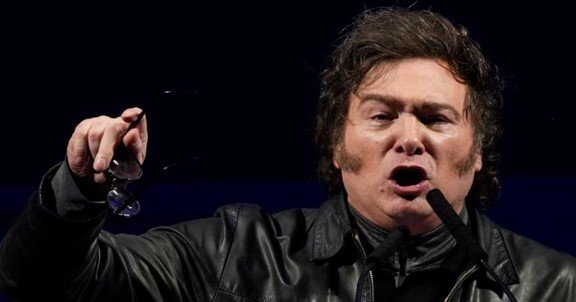
🖼️ Cover image of the original coverage. Credit: Diario Huarpe
The national government confirmed on Wednesday, October 14, that it will appeal the daily fine of $100,000 imposed by the Justice for not complying with the precautionary measure linked to the University Financing Law. The sanction, ordered by Federal Judge Martín Cormick, falls on the head of the Chief of Cabinet – according to different media reports, Diego Santilli – and opens a new instance in a conflict that is settled both in the courts and in the streets.
📌 IN 30 SECONDS
💸 The fine: $100,000 for each day of non-compliance, addressed to the head of the Chief of Staff.
⚖️ The reason: Judge Cormick considered the non-compliance with a firm precautionary measure on salaries and scholarships (Articles 5 and 6 of Law 27,795) verified.
🏛️ The official reaction: the government will appeal and questioned the magistrate; sources from Casa Rosada linked him to La Cámpora.
🎓 The universities: the CIN valued the sanction as a precedent and demands that the law be complied with.
🚶 Today: fifth Federal University March throughout the country.
🧭 In this article
• ⚖️ The judge's decision: $100,000 per day
• 🏛️ The Government's response: appeal and criticism of the magistrate
• 🎓 The view of universities
• 📜 What does Law 27,795 establish and why is it in dispute?
• 🗓️ Timeline of the conflict
• 🚶 Federal March and Measures of Force
• ❓ Frequently Asked Questions
• 🔮 What can happen now
⚖️ The judge's decision: $100,000 per day
In his resolution, Cormick – head of the Federal Administrative Court No. 11 – understood that there is a "verified non-compliance" with the precautionary measure and resolved to make effective the warning he had ordered on September 30, 2026. Consequently, he applied daily astreintes to the official of the Chief of the Cabinet of Ministers.
The astreintes are injunction economic sanctions: they do not seek to compensate, but to pressure the obligor to comply with what a judge ordered. The magistrate stated that the precautionary measure "continues to be active, firm and mandatory" and warned that the amount and the officials reached could be modified if the non-compliance persists.
The measure orders the recomposition and updating of the salaries of teaching and non-teaching staff of public universities and to guarantee the funds allocated to student scholarships. The case is processed under file 39.475/2025 and was promoted by the National Interuniversity Council (CIN) and other parties against the National State.
🏛️ The Government's response: appeal and criticism of the magistrate
The Executive announced that it will appeal the decision with the aim of annulling the sanction. As reported, its proposal maintains that there was no deliberate omission; in addition, the Government has maintained for weeks that, with the increases applied, it is advancing in compliance with the precautionary measure.
Along with the appeal, the Casa Rosada harshly questioned the judge. Official sources affirmed that he is a magistrate who repeatedly rules against the management of Javier Milei, who "has a past and friends in La Cámpora" and recalled that he had tried to declare the anti-picketing protocol null and void. They also described him as former head of the General Inspectorate of Justice and former general syndic of PAMI during the administration of Luana Volnovich.
Important: these are statements by government spokesmen. In the coverage consulted, no evidence was disseminated to support them or a response from the magistrate.
🎓 The view of universities
The president of the CIN, Franco Bartolacci, welcomed the resolution. He explained that the body had notified the judge of the expiration of the deadline without complying with the precautionary measure and that, therefore, it had requested the application of fines. For the leader, the relevant thing is not only that a daily sanction be set, but that specific responsibilities be established.
Bartolacci warned that the conflict is not yet resolved because the judicial process continues, but described the decision as "a very important step that we value." For the CIN, the fine ratifies that the law is not being complied with.
📜 What does Law 27,795 establish and why is it in dispute?
The Law on the Financing of University Education and Recomposition of Teacher Salary was approved by Congress in 2025 and ratified by both chambers after President Milei's veto. The Executive enacted it through decree 759/2025, but conditioned its application on Congress determining the sources of financing and incorporating the items into the budget.
The judicial discussion focuses on articles 5 and 6: the first contemplates the salary update of teachers and non-teachers (with the recomposition period ranging from December 2023 to September 2025) and the second, the recomposition of student scholarship programs. The Government argues that applying it without first defining its financing would affect the fiscal balance; the Justice dismissed this proposal in the previous instances.
🗓️ Timeline of the conflict
• December 2025: Cormick issues the injunction at the request of the CIN and the universities.
• March 2026: The Federal Administrative Court confirms the precautionary measure and rejects the official appeal.
• June 25, 2026: The Supreme Court rejects the Executive's extraordinary appeal for not being directed against a final judgment; the precautionary measure remains final.
• September 22: The judge orders the State to comply within five days, under threat of applying astreintes.
• End of September: the Government appeals the summons; on September 30 the warning is ordered.
• October 14: The fine of $100,000 per day becomes effective and the Government confirms that it will appeal.
• October 15: Fifth Federal University March.
🚶 Federal March and Measures of Force
The news coincides with the fifth Federal University March, called for this Thursday, October 15. The executive committee of the CIN met in the Cabildo of Buenos Aires to demand compliance with the law and call for mobilization, with replicas in different cities of the country, such as Santa Fe and Posadas.
At the union level, the University Trade Union Front denounced that, in the face of a salary demand of 31.2%, the Government proposed a 3% increase, and carried out a strike in unity throughout the system. In Rosario, the Coad union decided to stop on the 15th and will take to Conadu the motion for a strike for an indefinite period of time.
❓ Frequently Asked Questions
How much is the fine and how long does it run?
It is $100,000 for each day of non-compliance. The judge warned that the amount and the officials reached could be modified if the delay continues.
Who must pay it?
The sanction is aimed at the official of the Chief of the Cabinet of Ministers, a position that, according to the media consulted, is occupied by Diego Santilli.
Why is the Government appealing?
He seeks to annul the astreintes. He maintains that there was no deliberate omission and that he advances in compliance with the increases applied, and questions the impartiality of the judge.
What exactly does the precautionary measure require?
Recompose and update the salaries of university teachers and non-professors and guarantee funds for student scholarships (Articles 5 and 6 of Law 27,795).
Does the appeal stop the fine?
The notes consulted do not specify whether the appeal suspends the sanction. That will depend on what the judge himself or the Court of Appeals resolves.
🔮 What can happen now
• The conflict will continue in the judicial sphere with the processing of the appeal announced by the Executive; no deadlines for its resolution were reported.
• If the non-compliance persists, the judge could adjust the amount of the astreintes or increase the number of officials reached.
• Meanwhile, the universities maintain the demand for the updating of funds and salaries, with marches and industrial action underway.
🔗 Sources consulted
1. LV12 — University financing: the Government will appeal the fine imposed by the Justice
2. Diario Huarpe — The Government will appeal the fine for failing to comply with the University Financing Law
3. The Intransigent — The Government of Javier Milei seeks to get rid of the fine
4. Examedia — The government will appeal the university ruling and took aim at the judge
5. Examedia — The government was fined $100,000 per day and will appeal
6. Enterate Noticias — Criticism from Casa Rosada and Grounds for the Appeal
7. Diario Pampero — The Government will appeal the fine for university funds
8. Facundo Quiroga — The Government Rejected the Ruling and Prepares an Appeal
9. Profile — Judge Cormick indicts the government over college funding law
10. NQN News — The Government appealed the summons of the Justice
11. NQN News — The Justice ratified that the Government must apply the law
12. Tiempo Argentino — We strike because we can't stand any more silence or provocations
13. Misiones Online — Call for a new Federal University March
 ⚖️ Supreme Court reinstates the law that limits the sale of land to foreigners
- 09/10/2026 » 12:19 by cronywell
⚖️ Supreme Court reinstates the law that limits the sale of land to foreigners
- 09/10/2026 » 12:19 by cronywell
⚖️ Supreme Court reinstates the law that limits the sale of land to foreigners
The Court suspended the decree that eliminated restrictions and referred a precautionary measure to the Federal Court of Bariloche
Reading Time: 5 minutes
📌 SEO SUMMARY: The Supreme Court of Justice of the Nation provisionally suspended the effects of article 154 of DNU 70/2023 and reinstated the limits on the purchase of rural land by foreigners while the Federal Court of Bariloche analyzes the merits of the claim.
📰 Development of the news
The Supreme Court of Justice of the Nation issued an interim precautionary measure that puts back into force the restrictions provided for by Law 26,737 on the acquisition of rural land by foreign citizens and companies. The decision provisionally suspends the effects of Article 154 of DNU 70/2023, promoted by the national government, which had repealed that regulation.
The ruling was signed by Horacio Rosatti, Ricardo Lorenzetti and co-judges Diego Barroetaveña and Juan Ignacio Pérez Curci. Carlos Rosenkrantz voted in partial dissent. The resolution does not settle the discussion on the constitutionality of the decree, but seeks to preserve effective judicial protection until pending issues are resolved.
The case was promoted by the environmental association Árbol de Pie, native communities and the leader of Río Negro Magdalena Odarda. The plaintiffs maintain that the repeal of the Land Law could affect collective and territorial environmental rights.
As an immediate consequence, the limits established by the legislation are once again applied, including the cap on foreign participation on rural land and restrictions on sensitive areas from the environmental, water and border point of view.
The Court returned the file to the Federal Court of Bariloche, which must determine the legitimacy of the plaintiffs and analyze the precautionary measure requested. Until then, the restrictions will remain in force provisionally.
📊 Keys to the ruling
Temporarily reinstates the Rural Land Law.
It suspends the effects of article 154 of DNU 70/2023.
The decision is precautionary and not final.
The file returns to the Federal Court of Bariloche.
Restrictions on the purchase of land by foreigners remain in place while the process continues.
🖼️ Suggested image
 The CGT marches for the national industry and increases tension in Congress over the Land Law and DNU 70
- 08/10/2026 » 09:13 by cronywell
The CGT marches for the national industry and increases tension in Congress over the Land Law and DNU 70
- 08/10/2026 » 09:13 by cronywell
🗞️ POLITICS · 💼 TRADE UNIONS · 📈 ECONOMY · 🇦🇷 ARGENTINA
The CGT marches for the national industry and increases tension in Congress over the Land Law and DNU 70
The labor federation has been concentrating since 3 p.m. on Diagonal Sur and Perú towards the former Ministry of Industry, with no general strike in sight. At the same time, the ruling party and the opposition are measuring forces in the Chamber of Deputies ahead of the special session on October 15.
✍️ By Redacción Política | 📍 Buenos Aires | 📅 Thursday, October 8, 2026
⏱️ Reading time: 10 min | 📝 1,895 words | 🔄 Note in development
|
⚡ IN BRIEF • 🚶 The march: the CGT concentrates from 3 p.m. on Diagonal Sur and Peru and advances towards the former Ministry of Industry, today the Ministry of Industry. • 🛑 No strike for now: the union postpones the general strike and maintains a staggered plan of action initiated in July. • 🏭 The hard fact: according to the UIA, industrial activity fell 5.7% year-on-year in August. • ⚖️ The trigger: the Court's ruling of September 29 reactivated the repeal of the Land Law provided for by DNU 70/2023. • 🏛️ Congress: the opposition called a special session on October 15; the ruling party seeks to deactivate it and proposes to hold a session on the 21st. |
|
🖼️ IMAGE 1 · Cover · Federal march and mobilizations in October Alt text (alt): Column of protesters marching in downtown Buenos Aires with Argentine flags and banners 🔗 Absolute link: Open original image (infobae.com) Credit: Infobae (file photo of the Federal University March) |

BUENOS AIRES.— The General Confederation of Labor (CGT) returned to the streets on Thursday, October 8, with a mobilization through downtown Buenos Aires, in rejection of the economic course of the Government of Javier Milei and in demand of a policy of productive development. The column concentrates from 3 p.m. on Diagonal Sur and Peru and advances towards the building of the former Ministry of Industry, current headquarters of the Secretariat of Industry.
The protest comes in a week of high political temperature: in Congress, the ruling party and the dialogue blocs are negotiating how to shield DNU 70/2023 in the face of the special session that the opposition called for October 15, with the Land Law as the axis of the conflict.
🚶 The march: what the CGT is demanding and how it is organized
The labor federation called under the slogan "The Malvinas are Argentine, so is the national industry," a phrase that takes up the aesthetics of the August 6 mobilization, when the government withdrew the chapters on land and fire management from the project of Inviolability of Private Property. The declared axis is the defense of production, employment and development.
The collegiate leadership of the CGT is made up of Jorge Sola (Insurance), Octavio Argüello (Truckers) and Cristian Jerónimo (Glass). From the central they maintain that industry means work, sovereignty and future, and warn about the closure of SMEs and the loss of registered employment. Sola also called for a tax reform that alleviates the burden on production and work, and stated that local industry competes at a disadvantage against products manufactured under other working conditions and cost structures.
📌 A "solo" march
Unlike other days, this mobilization is exclusively cegetista: it is not accompanied by other unions or social movements. These sectors will converge on Thursday, October 15 in the Federal University March, which the CGT will join. The decision was made at a meeting of the leadership at the headquarters of the UOCRA, where it was also decided to postpone a national strike.
Today's is the fourth action of a plan initiated in July, which included marches for retirees (July 22), San Cayetano (August 7) and for the indebted (August 20), the latter coordinated with the two CTAs and the UTEP.
Asked about the general strike, Jerónimo explained that the measure will be taken when the union considers that it is the right time and that, today, a strike would harm the workers represented. Even so, he described a social picture of deterioration and described it as "the worst scenario."
🏭 Industry in the crosshairs: the numbers behind the claim
The union's proposal is supported by the latest report from the Center for Studies of the Argentine Industrial Union (UIA): manufacturing activity fell 0.3% in August compared to July and 5.7% in the year-on-year comparison. In the first eight months of 2026, it accumulated a 3% drop and is 11% below the volumes of 2022 and 2023.
The coverage also circulates figures attributed to the SIPA and the UIA that speak of more than 100,000 formal jobs lost and more than 4,000 factories closed since the end of 2023. These are data that should be contrasted with the official series before taking them as definitive figures.
⚖️ The trigger: the Court's ruling and the Land Law
The political conflict accelerated after the resolution signed on September 29 by Horacio Rosatti, Carlos Rosenkrantz and Ricardo Lorenzetti. The Court annulled a ruling of the Federal Court of La Plata that had declared Article 154 of DNU 70/2023 unconstitutional, considering that the Malvinas Islands of La Plata Veterans Center (CECIM) lacked standing to promote a collective action.
As a consequence, the repeal of Law 26,737, which set a 15% cap on foreign ownership of rural land, limited the participation of the same nationality within that quota to 30%, and restricted the purchase of real estate with relevant bodies of water or in border security zones, took effect again. The court clarified that it did not rule on the substantive constitutionality of the article and that other persons or organizations may file new precautionary measures.
|
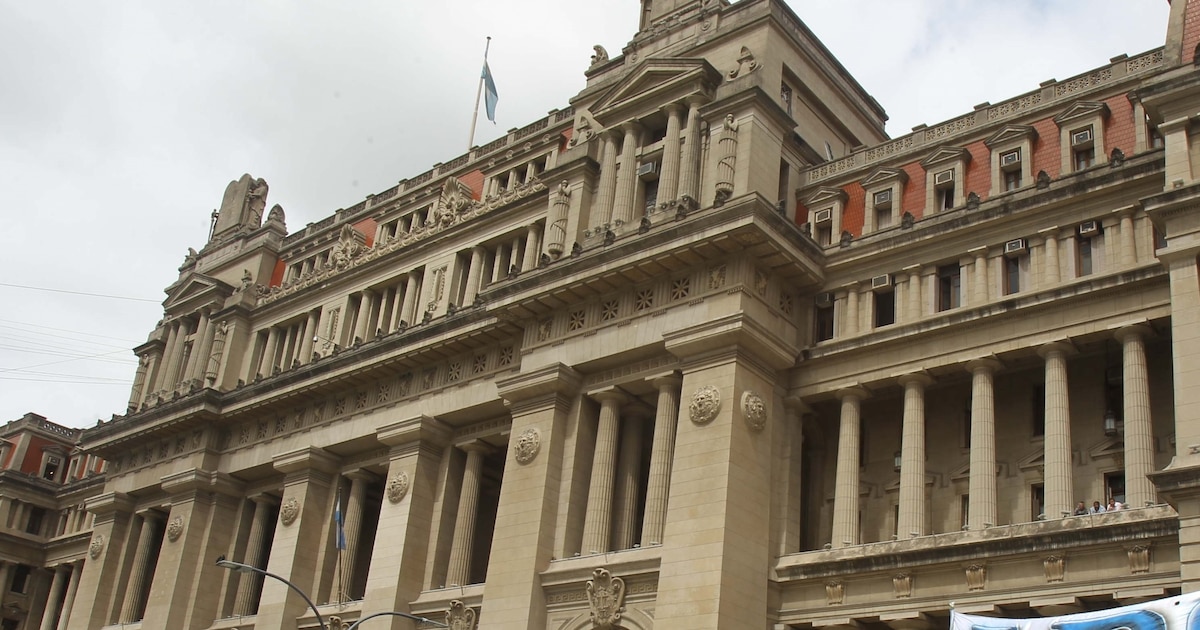
🖼️ IMAGE 2 · Rally in front of the Palace of Courts (October 6) Alternative text (alt): Social and trade union organizations in front of the Courts against the Court's ruling on the Land Law 🔗 Absolute link: Open original image (infobae.com) Credit: Infobae |

Deputies Miguel Ángel Pichetto and Nicolás Massot presented an injunction to suspend Article 154 again while Congress defines its fate. At the same time, the highest court advanced in the call of co-judges for a new debate based on a proposal by the Árbol de Pie association, a movement that the ruling party is following closely.
|
📖 GLOSSARY · What is DNU 70/2023? It is the decree "Bases for the Reconstruction of the Argentine Economy", signed by Javier Milei on December 20, 2023. Original of 366 articles, it modified rules on rents, commerce, health, transportation, public companies, labor market and more. The Senate rejected it on March 14, 2024 (42 votes to 25 and 4 abstentions), but since the lower house never dealt with it, the decree remains in force. |
🏛️ The legislative chessboard: two sessions, one dispute
🗓️ The opposition session on October 15
The opposition blocs called a special session in the Chamber of Deputies for Thursday 15 at 2 p.m. The agenda includes the rejection of DNU 70/2023, a bill on indebtedness and delinquency of families and the extension of the disability emergency until December 31, 2027. To open the chamber, 129 legislators are needed. If the lower house also rejects the decree, as the Senate has already done, the rule would be repealed going forward.
In Union for the Homeland they admit that the prospects of reaching a quorum are complicated as the date approaches, but they maintain that they will go to the venue anyway to make it clear who supports the repeal and who does not.
🧩 The government's counteroffensive
La Libertad Avanza tries to leave the opposition session without a quorum and, at the same time, offers the dialoguists to open the chamber on October 21 with another agenda: Defense of National Sovereignty, disability and family over-indebtedness. In a meeting held on Wednesday in the Hall of Honor, with the presence of the Secretary of Finance, Carlos Guberman, the allies insisted on what the government will do with the Land Law and did not get a conclusive answer.
The alternative that today appears to be stronger is to reintroduce restrictions on the purchase and sale of rural land within the Law of Inviolability of Private Property, which came with half the approval of the Senate. The idea would be to rescue the Land Law by another means to protect the rest of DNU 70, considered the cornerstone of the official economic program. A decision has not yet been made.
The negotiation also includes the 2027 Budget, whose debate begins on Tuesday 13 with the official goal of ruling before the visit of Pope Leo XIV, and changes to the project for the Defense of National Sovereignty: the allies ask to eliminate Article 111, which provides for prison sentences for actions of disinformation or destabilization carried out on behalf of foreign entities. The opposition questions it for its possible impact on journalistic work and legitimate criticism.
|
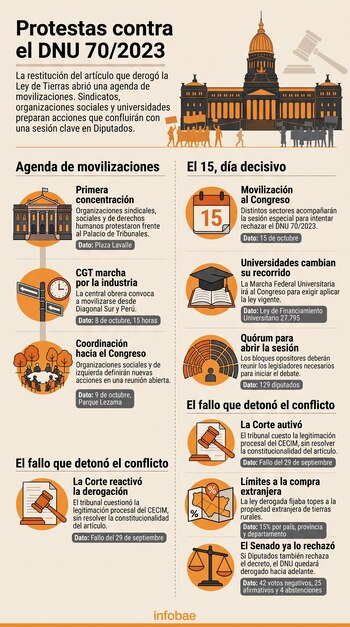
🖼️ IMAGE 3 · Infographic · Calendar of protests against DNU 70/2023 Alternative text (alt): Infographic with the dates of mobilizations called against DNU 70/2023 in Argentina 🔗 Absolute link: Open original image (infobae.com) Credit: Infobae (illustrative infographic) |
🗣️ The voices of protest
• Hugo Robert (CECIM): he took aim at the ruling and also against the political leadership, which he accused of having ignored for more than two years the protection protected by the law.
• Hugo Godoy (CTA-A) and Hugo Yasky (CTA-T): described the ruling as serious and linked it to the session of the 15th, in which the opposition blocs seek to gather a quorum.
• Myriam Bregman and Nicolás del Caño (FIT-U): called for a massive mobilization of Congress and demanded that the trade union centers hold an active national strike on that date.
• CGT: questioned the judges of the Court in a statement, but did not formally join the march to the Courts or announce a strike for the 15th.
🗓️ Agenda for the week and next
|
Date |
Fact |
|
Tue 6/10 |
⚖️ Rally in front of the Courts (Plaza Lavalle) against the Court's ruling. |
|
Thu 8/10 · 15:00 |
🚶 CGT march from Diagonal Sur and Peru to the former Ministry of Industry. |
|
Fri 9/10 |
✊ Self-convocation in Lezama Park to define the street response. |
|
Tue 13/10 |
📑 The debate on the 2027 Budget begins in Deputies. |
|
Thu 10/15 · 14:00 |
🏛️ Special opposition session for DNU 70/2023 and mobilization to Congress, together with the Federal University March. |
|
Wed 21/10 |
🧩 Session proposed by the ruling party: National Sovereignty, disability and indebtedness. |
🔎 Keys to follow what's coming
• The magic number: 129 present to open the session on the 15th. Each dialoguer who is absent or sits down tips the scales.
• The judicial letter: a new precautionary measure or the decision on the co-judges could alter the scenario of the Land Law before the precinct.
• The CGT's plan of struggle: the union keeps the option of a strike open, but conditions it at the time it deems appropriate.
• Legislative barter: Budget 2027, Article 111 and rural lands appear as pieces of the same negotiation.
❓ Frequently Asked Questions
❔ Where and at what time does the CGT march?
The rally is at 3 p.m. on Diagonal Sur and Perú, in downtown Buenos Aires, and from there it marches to the building of the former Ministry of Industry (Secretariat of Industry).
❔ Is there a general strike by the CGT?
No. The union postponed the national strike and, for the moment, did not announce a strike for October 15.
❔ What happened to the Land Law?
A Supreme Court ruling on September 29 annulled the precautionary measure that suspended Article 154 of DNU 70/2023, which brought the repeal of Law 26,737 back into force.
❔ When does the Deputies meet for DNU 70?
The opposition called a special session for Thursday, October 15 at 2 p.m., with the need for 129 legislators to open the debate.
📚 Sources and ampliatory readings
• 🔗 Infobae · Lands, industry and universities: the demands and protests planned for October
• 🔗 RTS Media / Noticias Argentinas · To shield DNU 70, the Government seeks to rescue the Land Law
• 🔗 The Uncovering · The CGT marches again "in defense of the National Industry"
• 🔗 El Esquiú · The CGT returns to the streets: march in defense of the national industry
• 🔗 Bariloche News · The CGT marches again through the Buenos Aires microcenter
• 🔗 The Jujuy Submarine · The CGT will march this Thursday in defense of the national industry
🗒️ Note in development. Prepared based on the journalistic coverage available as of October 8, 2026; it does not yet include attendance figures or the outcome of the day. It will be updated as there are news.

 The blue dollar falls pending definitions: fixed terms, activity and DNU 70/23 mark the week
- 05/10/2026 » 23:12 by cronywell
The blue dollar falls pending definitions: fixed terms, activity and DNU 70/23 mark the week
- 05/10/2026 » 23:12 by cronywell
📰 ECONOMY AND DOLLAR
The blue dollar falls pending definitions: fixed terms, activity and DNU 70/23 mark the week
The blue closed around $1,550, activity falls and Deputies prepare a key session on October 15.
|
✍️ Economy Editorial Team | 📅 October 5, 2026 | ⏱️ Read: 4 min | 📝 818 words approx. |
The foreign exchange market started the week on a calm note: the blue dollar lost ground and closed at around $1,545-$1,550, according to the source consulted, its biggest fall in almost two months. But while the financial market breathes, the economic and political agenda adds layers of uncertainty: activity that continues to decline, fixed-term rates that barely move and a key session in the Chamber of Deputies for DNU 70/23.
💵 Dollar: the blue goes down and the official one remains firm
This Monday, October 5, the blue dollar closed at $1,550 for sale in the Ámbito survey, with a drop of $15 compared to the previous round. Other markets reported slightly different values, between $1,545 and $1,560, a usual dispersion in the parallel market. The official one remained at $1,540 in the Banco Nación, with which the gap practically disappears.
• 🏦 Wholesale: closed at $1,520, more than $400 below the ceiling of the exchange bands, the largest distance in 17 months according to Infobae.
• 📈 MEP dollar: around $1,538, with a gap of close to 1.2% against the official one.
• 🌐 Cash with settlement: between $1,603 and $1,623 depending on the source.
• 💳 Card dollar: $2,002, with a surcharge of 30% on the official one.
In parallel, optimism for Brazil pushed the S&P Merval 3.7% and took the country risk below 600 basis points, while the Central Bank bought USD 14 million.
📉 Economic activity: the worrying data
The weakest front is the real economy. Indec's EMAE showed a 2.9% seasonally adjusted drop and a 1.4% year-on-year decline, the lowest level since March 2025, according to Infobae's analysis. The signal is replicated in the industry: automotive production in September was 15.6% lower than a year ago, although the sector's exports rose 6.8%.
🏦 Fixed terms: the rate rises, the saver compares
Banco Nación raised its APR to 19.25% for 30-day electronic placements, from 18.75%, which is equivalent to an effective monthly yield of 1.58%. With $500,000, the interest is around $7,911 in 30 days. Banco Provincia leads among the large banks with 21%, followed by Macro (19.5%) and BBVA (19%); Galicia offers 18.25%, Ciudad 17%, Santander 16.5% and Patagonia 16%. As the BCRA does not set a minimum rate, the difference between entities weighs on the final result.
🏛️ DNU 70/23: countdown in Congress
The opposition called a special session in the Chamber of Deputies for Thursday, October 15 at 2 p.m., with three topics: repealing DNU 70/23, extending the disability emergency until 2027 and a bill on family indebtedness. The Senate had already rejected the decree on March 14, 2024, so the definition was left in the hands of the lower house.
The board is tight. According to El Destape, the opposition is 14 votes short of reaching the quorum of 129, with 29 undecided deputies. La Nación, on the other hand, reports that the Casa Rosada is negotiating with allied governors to prevent the session from prospering and is confident that the opposition will not reach the number.
The judicial context adds tension: the Supreme Court reinstated Article 154, which repealed the Land Law, although without ruling on its constitutionality, since it considered that the CECIM did not have standing to file the amparo. Social organizations will march on Tuesday 6 to the Courts and on October 15, at 1:30 p.m., the Congress will be the scene of the Federal University March.
What could come back if the decree falls?
• 🏠 The previous Rental Law, instead of freely agreed contracts.
• 🩺 Restrictions on prepaid medicine fee increases.
• 🌿 The National Institute of Yerba Mate, dissolved by the decree.
• 🌾 Limits to the foreignization of rural lands.
🔎 Keys to follow
• Evolution of the blue against the official one after the initial drop of the week.
• Upcoming Indec activity data and its impact on employment.
• Quorum count in Deputies before October 15.
• Bank rate movements and real yield vs. inflation.
Note: Quotes vary by source and time of survey; values are informational and do not constitute financial advice.
🖼️ Reference Images
I couldn't verify the display of images from my environment (access to Wikimedia is blocked), so I didn't embed them. This is a candidate found in a search, to validate by opening the link before publishing and respecting its license:
🏛️ National Congress (Wikimedia Commons): 500px-Buenos_Aires-Plaza_Congreso-Pensador_de_Rodin.jpg

📚 Sources
🔗 Scope: Blue dollar, close on October 5
🔗 LA NACION: Blue dollar today, October 5
🔗 LA NACION: Deputies and DNU 70/23
🔗 LA NACION: Bank-by-bank fixed-term
🔗 MDZ: Banco Nación fixed term at 19.25%
🔗 Infobae: EMAE, rates and country risk
🔗 Infobae: What laws would return if DNU 70 falls?
🔗 El Destape: the 29 undecided deputies