







News
 🔥 Fires in Patagonia:
- 25/01/2026 » 10:06 by cronywell
🔥 Fires in Patagonia:
- 25/01/2026 » 10:06 by cronywell
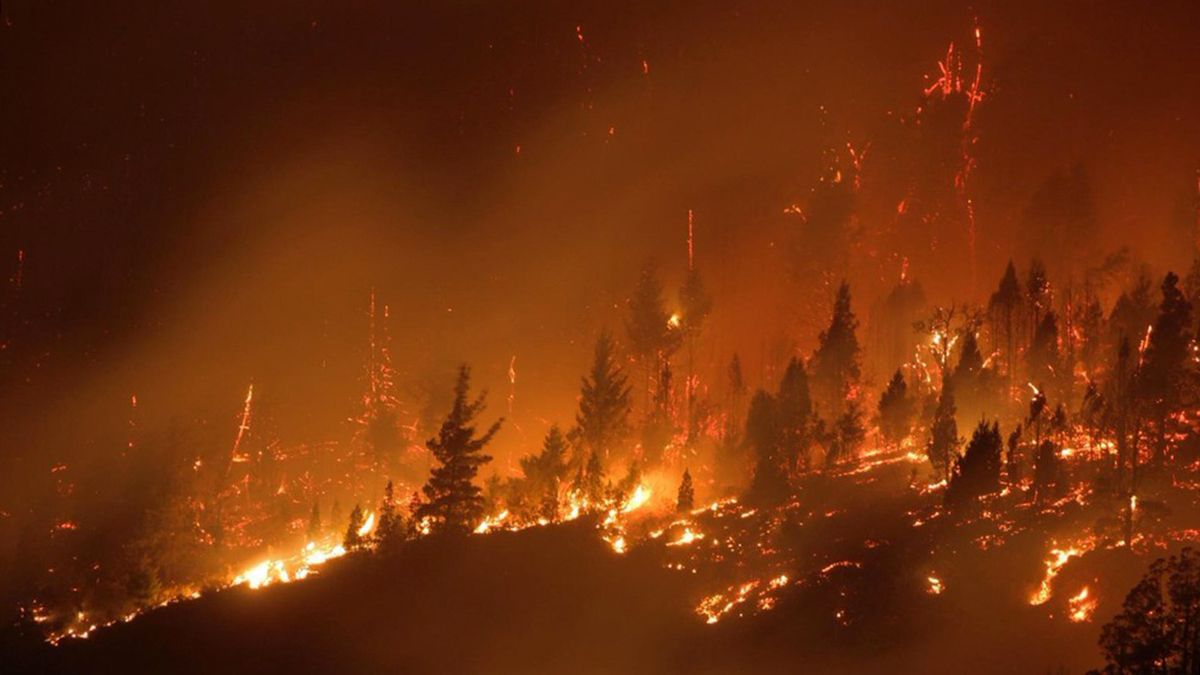
🔥 Fires in Patagonia: more than 15,000 hectares affected in Chubut and concern grows about possible intentionality
The forest fires that have been affecting the province of Chubut for several days have already consumed more than 15,000 hectares of native forests and grasslands, in one of the most severe events of the summer season. The provincial and national authorities are deploying a wide operation to try to contain the advance of the fire, which is favored by the high temperatures, low humidity and strong winds characteristic of the region.
🚒 A large-scale operation
More than 350 firefighters, including personnel from the National Fire Management Service (SNMF), volunteer firefighters, provincial teams and federal forces, are working on different active fronts. The operation includes:
- Ground crews with hand tools and motor pumps
- Helicopters with helibucket for aerial unloading
- Hydrant planes operating from nearby bases
- Logistics, communications and health support teams
The tasks are concentrated in areas that are difficult to access, where the mountainous topography and the density of the forest make it difficult for the brigade members to advance.
🌲 Environmental impact and risk to communities
The fire affects areas of high ecological value, with the presence of native species such as cypress, coihue and lenga. Specialists warn that the recovery of these ecosystems may take decades.
Although no fatalities were recorded, several rural communities remain on preventive alert, and some residents were temporarily evacuated due to the advance of smoke and the proximity of the flames. Intermittent roadblocks were also reported on routes and secondary roads.
🔍 Possible intentionality is being investigated
Judicial and environmental authorities opened an investigation to determine the origin of the fire. Although there are no official conclusions yet, intentionality, a recurring factor in the fires in the region in recent years, is not ruled out.
Sources from the provincial government indicated that testimonies, satellite images and patterns of fire initiation are being analyzed to establish responsibilities.
🏛️ Official response and requests for reinforcement
The national government activated the SNMF emergency protocol and sent additional resources at the request of the province. Environmental organizations and local leaders are calling for greater investment in prevention, infrastructure and control, especially in areas where real estate and tourism pressure has grown rapidly.
🌦️ Forecast and outlook
The weather forecast for the next few days anticipates adverse conditions, with high temperatures and variable winds that could complicate containment tasks. Teams on the ground are working to consolidate firebreaks and prevent the fire from reaching populated areas or more sensitive nature reserves.
 Milei in Davos: a more moderate discourse with an international focus
- 22/01/2026 » 16:07 by cronywell
Milei in Davos: a more moderate discourse with an international focus
- 22/01/2026 » 16:07 by cronywell
Milei in Davos: a more moderate discourse with an international focus
🌍 Introduction: a global scenario where the message can be recalibrated
Argentine President Javier Milei's participation in the World Economic Forum in Davos marked a turning point with respect to his previous interventions. Although it maintained its classical liberal narrative, the tone was significantly more moderate and aimed at building international dialogue. The speech sought to convey predictability, attract investment and reposition Argentina as an actor aligned with the market economy.
🗣️ A change of tone: ideological firmness, less confrontation
Unlike his more combative statements in the campaign or in the legislative opening, Milei opted for a less confrontational register.
- It reduced the polemical burden against multilateral organizations and foreign leaders.
- He avoided direct attacks on governments of the opposite sign.
- He prioritized macroeconomic concepts over ideological slogans.
The objective was clear: to show himself as a president capable of sustaining his convictions without dynamiting diplomatic bridges.
💼 Economic message: orthodoxy, stability and "confidence shock"
The core of the speech revolved around the need to stabilize the Argentine economy by:
- Strict tax discipline
- Trade openness
- Market deregulation
- Long-term structural reforms
Milei insisted that Argentina "has no room for gradualism," but he did so without the apocalyptic tone of other occasions. The strategy was to present the adjustment as a technical, inevitable process aimed at recovering credibility.
🌐 International focus: alignment and search for partners
The president dedicated a good part of his speech to reinforcing the idea that Argentina wants to integrate into the world.
- He reaffirmed ties with the United States and Europe, highlighting democratic values and economic freedom.
- It sought to attract capital by emphasizing legal certainty and opportunities in energy, mining and agribusiness.
- He avoided tensions with China and Brazil, despite ideological differences, which was read as a pragmatic gesture.
The implicit message: Argentina needs partners and is willing to play by predictable rules.
🧭 International reception: caution, interest and expectation
The reaction in Davos was mixed but mostly attentive.
- Businessmen and investment funds valued the shift towards a more technical discourse.
- Political analysts highlighted moderation as a sign of institutional learning.
- Foreign governments cautiously viewed the domestic viability of the reforms.
The challenge for Milei will be to turn this good initial reception into concrete commitments.
Internal impact: message to markets and opposition
In a domestic key, the speech functioned as a signal to:
- The markets, which are looking for stability and a clear direction.
- The opposition, to which Milei is trying to show that his economic program has international support.
- Its own base, which might see moderation as a tactical strategy, not as an ideological abandonment.
The balance between external pragmatism and internal radicalism will be one of the axes of his administration.

🔮 Conclusion: a more diplomatic Milei, without renouncing his identity
The visit to Davos left the image of a president who is trying to reconcile his liberal-libertarian identity with the need for international governance. The moderation of tone does not imply a change of course, but a strategic adjustment to gain global legitimacy and attract investment.
The real test will come in the coming months, when he must demonstrate that his economic program can be sustained politically within Argentina.
 📉 Foreign investment falling: Argentina registers historic deficit in 2025
- 03/01/2026 » 09:33 by cronywell
📉 Foreign investment falling: Argentina registers historic deficit in 2025
- 03/01/2026 » 09:33 by cronywell
📉 Foreign investment falling: Argentina registers historic deficit in 2025
Introduction
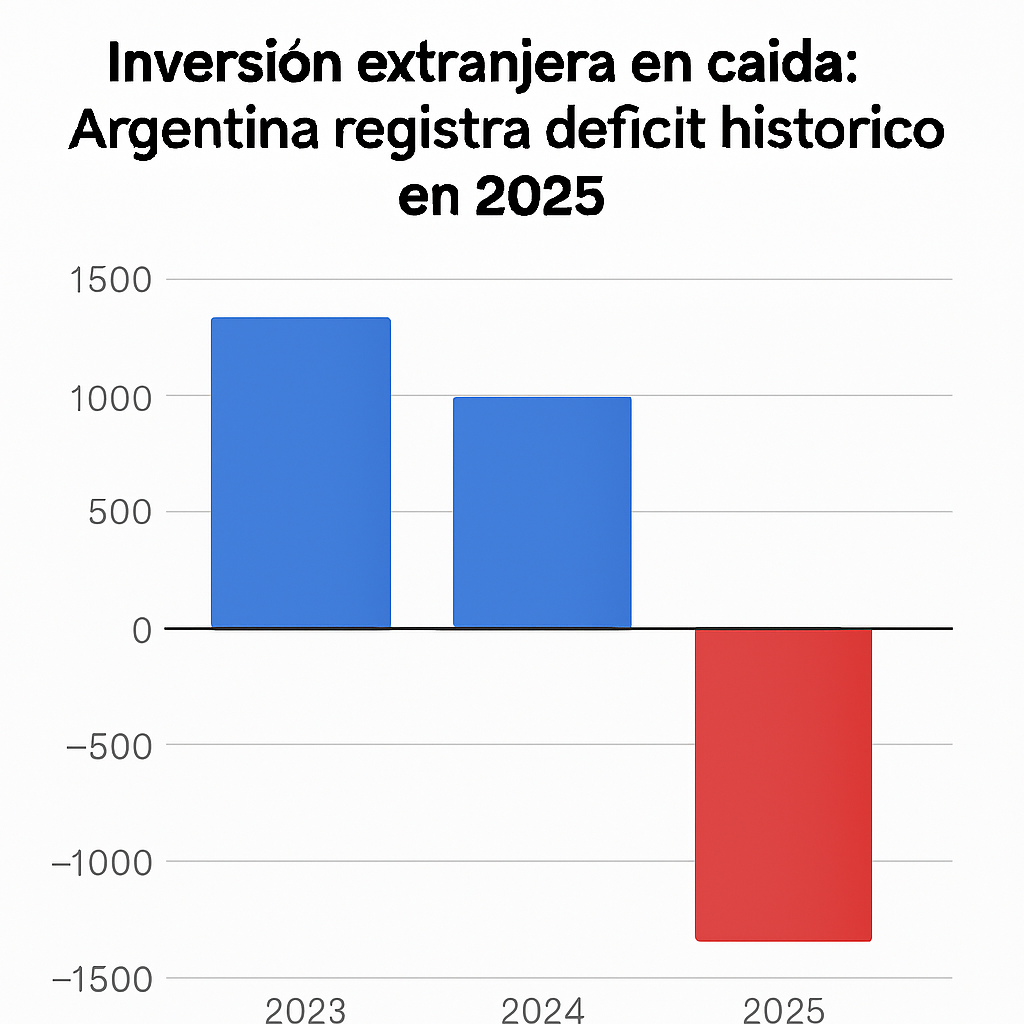
Foreign direct investment (FDI) in Argentina closed 2025 with a negative balance of USD 1,421 million, the first since 2003. The data reflects the outflow of capital and the lack of new large-scale investments, in a context of economic and political uncertainty.
Context and figures
- FDI inflows: USD 1,342 million between January and November.
- Expenditures: USD 2,763 million in the same period.
- Result: Deficit of USD 1,421 million.
- Historical comparison: In 2024 the balance had been slightly positive (USD 89 million).
Factors that explain the fall
- Exit of multinationals: Several international companies reduced operations or sold assets to local groups.
- Deteriorated investment climate: The liberalization of the exchange rate clamp failed to attract fresh capital.
- International perception: Media such as the Financial Times remarked that the reforms of Javier Milei's government have not yet convinced large corporations.
Economic and political impact
- Worrying sign: FDI is key to productive projects and job creation.
- Challenge for the Government: It contradicts the official discourse of "macroeconomic order" and puts pressure on the strategy of trade liberalization.
- Regional comparison: Argentina differs negatively from neighboring countries that maintain positive investment flows.
Conclusion
The fall in foreign direct investment in 2025 is a negative milestone for the Argentine economy. The challenge for 2026 will be to regain credibility and attract genuine capital, preventing the exit of multinationals from becoming a structural trend.
 Health alert in Argentina
- 20/12/2025 » 11:37 by cronywell
Health alert in Argentina
- 20/12/2025 » 11:37 by cronywell
📰 Health alert in Argentina: cases of measles and whooping cough increase
The Ministry of Health issued an epidemiological alert after detecting a significant increase in cases of measles and whooping cough in different provinces of the country. The situation worries the authorities due to the low vaccination coverage in the child and adolescent population, which has resulted in several deaths of minors who had not received the corresponding doses.
📈 Epidemiological context
- In recent weeks, outbreaks were confirmed in Córdoba, Buenos Aires and Santa Fe, with community circulation of both diseases.
- Influenza A H3N2 is also under surveillance, although a significant increase in cases has not yet been reported.
- According to official data, measles vaccination coverage is below 85%, far from the 95% recommended by the World Health Organization.
🧪 Official statements
The Minister of Health, Carla Vizzotti, warned:
"We are facing a complex scenario. Vaccination is the most effective tool to prevent preventable deaths. We urge families to complete their children's immunization schedules."
👨 👩 👧 Social impact
- Parents expressed concern about the lack of mass vaccination campaigns in vulnerable neighborhoods.
- Medical and pediatric organizations are calling for a national plan to reinforce mobile brigades in schools and community centers.
- In public hospitals, there are long lines to access doses of MMR and vaccines against whooping cough.
📊 Key facts
|
Illness |
Confirmed cases |
Vaccination coverage |
Current risk |
|
Measles |
+250 in 3 provinces |
85% |
High |
|
Whooping cough |
+400 in 5 provinces |
80% |
Very high |
|
Influenza A H3N2 |
Active surveillance |
N/A |
Moderate |
🔍 Analysis
The health crisis exposes a structural weakness in the Argentine vaccination system, marked by the lack of sustained campaigns and misinformation on social networks. Experts warn that, if the trend is not reversed, the country could face an epidemic of similar magnitude to the one recorded in 2019, when measles reappeared after two decades of eradication.
📌 Conclusion
The current situation requires an immediate and coordinated response between the State, the provinces and civil society. Mass vaccination and clear communication will be key to stopping the advance of diseases that, in the 21st century, should be under control.