





bandeau_logo_en01.jpg

bandeau_logo_en02.jpg

bandeau_logo_en03.jpg

bandeau_logo_en04.jpg

bandeau_logo_en05.jpg

You are here :  Home
    Print this page...
Sentence to think about :  Everyone thinks about changing the world, but no one thinks about changing themselves.  (Alexei Tolstoi)

Shift Pharmacies

List of local doctors


MiDire discovery
 

Having an impeccable website on mobiles, tablets and computers is, today, an obligation for all webmasters!

Based on a "mobile-first" development with Bootstrap, MiDire will adapt to different screen sizes with a rendering optimized for each device, with a perfectly responsive site using HTML, CSS, Javascript and jQuery plugins.

The creators of plugins, of skins propose their creations to you to enrich the functions and the design of the sites, they are available on midire.com.ar.

MiDire ensures the compatibility of your site with all recent browsers, we recommend the use of Firefox for the protection of your data and your private life.

Good discovery !!!

The MiDire Team


Forum live

 🥧 Tarta Pascualina: el arte de la tradición en ocho capas de verdura Un clásico de la cocina de campo que se reinventa con técnica y corazón verde. Aprenda a dominar esta obra maestra de masa, espinacas, acelgas y huevos. 📅 Tiempo de lectura aproximado: 6 minutos 👩‍🍳 Dificultad: Media – Avanzada ⏱️ Tiempos: Preparación 1 h 20 min | Cocción 1 h 15 min 📊 Perfil nutricional: Alto en fibra, vitamina A, hierro y proteína vegetal 🟢 Introducción: más que una torta, una leyenda La Pascualina es una de esas recetas que llevan la memoria en cada pliegue de su masa. Originaria de Liguria (Italia) y adoptada con fervor en Argentina, Uruguay y Chile, esta tarta de verduras en capas no es una simple empanada grande: es un monumento a la paciencia y el sabor. Hoy la desmontamos paso a paso, con técnicas profesionales y un enfoque moderno para que luzca como en las mejores mesas del mundo. 🧾 Ingredientes (para un molde de 28-30 cm) Para la masa (8 bollos) Ingrediente Cantidad Harina 000 450 g Manteca 50 g Huevo entero 1 Sal fina una pizca Agua tibia c/n (hasta unir) Para el relleno Ingrediente Cantidad Acelgas (cocidas) 6 atados Espinacas (cocidas) 6 atados Zanahorias (cocidas y hechas puré) 2 Migas de pan remojadas en leche ½ pan Espárragos cocidos (solo puntas) 1 atado Huevos 3 Queso rallado 100 g Aceite ½ taza Sal, pimienta, nuez moscada a gusto Extra 4 huevos para incrustar crudos 1 huevo batido para pintar Manteca o aceite para pincelar capas 🥣 Paso a paso: técnica de pastelería profesional 1. La masa 📋 Sobre la mesa, forme una corona con la harina. Coloque en el centro la manteca blanda, el huevo y la sal. Incorpore agua de a poco hasta lograr una pasta firme pero no dura. Divida en 8 bollos iguales. Déjelos reposar tapados 15 minutos (relaja el gluten y evita que se encoja al estirar). 2. El relleno verde 🌿 Cocine las acelgas y espinacas en agua hirviendo con sal. Escúrralas, exprima muy bien (eliminar agua es clave). Píquelas finas. Mezcle en un bol: Verduras verdes picadas Puré de zanahoria Migas remojadas y exprimidas Puntas de espárragos 3 huevos Queso rallado, aceite y especias Consejo técnico: La nuez moscada se ralla en el momento – potencia los sabores terrosos de las espinacas. 3. Armado en capas (la parte mágica) 🧈 Enmantecar y enharinar el molde. Estirar cada bollo hasta dejarlo muy fino (casi transparente). Primera etapa: Colocar 1ª masa → pincelar con manteca derretida → 2ª masa → pincelar → 3ª masa → pincelar → 4ª masa. No pincelar la última. Rellenar con la mezcla de verduras. Con una cuchara, abra 4 huecos y coloque 1 huevo crudo en cada uno. Cubra con un poco de relleno. 4. Cierre y tapado 🥟 Cubra con la 5ª masa → pincelar → 6ª masa → pincelar → 7ª masa → pincelar → 8ª masa. Sellar bien los bordes haciendo repulgue de empanada. Pintar toda la superficie con huevo batido. 5. Cocción 🔥 Horno a 180 °C (temperatura regular) durante 1 hora y 15 minutos. Debe quedar dorada y crocante. ✨ Variante clásica: Si lo desea, puede usar solo 6 masas (3 abajo, 3 arriba). Pero con 8 queda más alta y espectacular. 📸 Imágenes  📊 Informe nutricional (por porción – 1/8 de tarta) Componente Aprox. valor Calorías 410 kcal Proteínas 14 g Grasas totales 22 g Carbohidratos 38 g Fibra 7 g Hierro 3.8 mg (28% VD) Vitamina A 430 µg (48% VD) ✅ Apta para: vegetarianos, madres lactantes (aporte de hierro y ácido fólico), deportistas. ⚠️ No apta para: celíacos (contiene gluten), personas con alergia al huevo crudo parcialmente cocido. 🧠 Tips de chefs para un resultado 10/10 Si la masa se rompe: no importa. Se superponen capas; la manteca entre ellas sella los errores. Para una versión más ligera: reemplace la manteca por aceite de oliva en la masa. Huecos bien hechos: presione suavemente el relleno antes de cascar los huevos, así no se desparraman. Reposo del horno: deje enfriar 10 minutos antes de cortar – los jugos se reabsorben. 🍽️ Maridaje sugerido 🥂 Vino blanco : Chardonnay sin madera o un Verdejo. 🍷 Tinto : Pinot Noir joven. 🥤 Sin alcohol : Limonada con hierbabuena o té negro frío con menta. ...
30/03/2026 » 13:39
(by cronywell)
  Receta Tradicional Argentina EMPANADAS CORDOBESAS Masa artesanal con carne de ternera, aceitunas, huevo duro y pasas de uva Tiempo total ~90 min Porciones ~20 empanadas Temperatura horno 200-220 C Dificultad Elaborada Nivel de dificultad: Elaborada (3 de 5)    Requiere preparación de masa artesanal y relleno cocido en dos etapas. Tiempos de preparación preparación masa 20 minutos preparación rellena 30 minutos cocción del relleno 15 minutos Armado de empanadas 10 minutos Horneado 15 minutos a 200-220 C TIEMPO TOTAL ~90 minutos Ingredientes - Masa Ingrediente Cantidad Harina 0000 1 kg Grasa de vaca 300 g Sal fina a gusto Agua tibia cantidad necesaria Ingredientes - Relleno Ingrediente Cantidad Grasa de vaca 300 g Cebollas grandes 2 unidades Tomate pequeño 1 unidad pimentón dulce 1 cucharadita Carnaza de nalga de ternera (sancochada) 1 kg Comino molido 1 cucharadita Papa grande cocida en dados 1 unidad Harina 1 cucharada Caldo de res 1 cucharoncito Huevos duros picados 2 unidades Aceitunas verdes sin carozo 100 g Pasas de uva sin semillas 100 g Aji picante molido 1/2 cucharadita Sal a gusto Paso a paso 1 Preparar la masa: Disponer la harina en la mesada formando un volcan. Incorporar la grasa de vaca, sal fina y agua tibia de a poco. Amasar hasta obtener una masa compacta, suave y lisa. Reservar. 2 Preparar la base del relleno: En una sartén grande, derretir los 300 g de grasa de vaca a fuego medio. Dorar las dos cebollas picadas. Agregar el tomate picado y el pimentón dulce. Revolver y retirar del fuego. 3 Incorporar la carne: Agregar la carnaza de nalga previamente sancochada (hervida brevemente) y cortada en daditos pequeños. Sumar el comino molido, la papa cocida en dados, la cucharada de harina y el cucharon de caldo. 4 Cocinar el relleno: Llevar nuevamente al fuego y hervir a fuego lento durante 15 minutos, revolviendo continuamente para evitar que se pegue. Retirar del fuego y dejar enfriar. 5 Finalizar el relleno: Agregar los huevos duros picados, las aceitunas verdes sin carozo y las pasas de uva sin semillas. Condimentar con sal y el aji picante molido. Mezclar bien. 6 Armar las empanadas: Dividir la masa en bollitos. Estirar cada uno dejando fino. Colocar una porción de relleno en el centro, humedecer los bordes con agua, cerrar y presionar bien uniendo ambas capas. Realizar el repulgo (el pliegue característico, 13 pliegues en la tradición cordobesa). 7 Hornear: Colocar en asadera y llevar a horno bien caliente (200-220 C) durante 15 minutos o hasta que estén doradas. Consejo de cocina El relleno debe estar completamente frio antes de armar las empanadas para evitar que la masa se humedezca. El repulgo cordobés tradicional lleva 13 pliegues, que es la marca característica de estas empanadas. Se pueden frezar en crudo y hornear directamente sin descongelar. información Nutricional Valores estimados por unidad (aproximadamente 100 g). Pueden variar según tamaño y cantidad de relleno. Nutriente (por empanada ~100g) Valor Calorías 310 kcal Grasas totales 18 g Grasas saturadas 7 g Proteínas 22 g Hidratos de carbono 24 g Fibra dietética 2 g Azúcares 5 g Sodio 380 mg Ficha Técnica de la Receta Campo Detalle categoría Plato principal / Merienda Cocina Argentina - Cordobesa Dificultad Elaborada (3/5) Tipo de cocción Horno Temperatura 200-220 C durante 15 min Rinde Aproximadamente 20 empanadas Tiempo de preparación 75 minutos Tiempo de cocción 15 minutos Tiempo total 90 minutos aproximadamente Apta celiakos No Apta vegetarianos No Se puede freezar Si (en crudo) SEO Metadata Título: Empanadas Cordobesas - Receta Tradicional Argentina | Masa Artesanal descripción: Aprende a preparar empanadas cordobesas auténticas con masa artesanal de grasa, relleno de carne de ternera, aceitunas, pasas y huevo duro. Receta paso a paso con información nutricional. Palabras clave: empanadas cordobesas, recetas empanadas argentinas, masa para empanadas, empanadas al horno, comida típica cordobesa, receta tradicional argentina Tiempo de lectura estimado: 3 minutos ...
29/03/2026 » 18:56
(by cronywell)
  HUEVOS RELLENOS A LA RUSA Clásico de la cocina casera con relleno de jamón del diablo y cama de ensalada rusa ⏱ PREPARACIÓN 10 min 🍳 ELABORACIÓN 20 min ⭐ DIFICULTAD Fácil 🍽 PORCIONES 5 personas Un plato de entrada refinado y nostálgico, de raíces en la cocina europea clásica. Los huevos duros se rellenan con una crema suave de yema, manteca y jamón del diablo, y se presentan sobre una generosa cama de ensalada rusa coronada con aceitunas negras y jamón cocido. INGREDIENTES Para los huevos rellenos: •        5 huevos frescos •        50 g de manteca a temperatura ambiente •        1 lata de jamón del diablo (aprox. 100–115 g) •        6 aceitunas negras, cortadas en rodajitas o pedacitos Para la base y guarnición: •        1 porción generosa de ensalada rusa casera (papa, zanahoria, arvejas, mayonesa) •        6 lonchas de jamón cocido, arrolladas en forma de rollito PREPARACIÓN PASO A PASO Cocción de los huevos: 1.     Colocar los huevos en una cacerola con agua caliente (no hirviendo). Llevar a hervor suave y mantenerlos cociendo durante 12 a 13 minutos exactos para obtener una yema completamente firme. 2.     Retirar del fuego y pasarlos de inmediato por abundante agua fría durante 2 minutos; esto facilita el pelado y evita que se forme el anillo oscuro alrededor de la yema. 3.     Pelar con cuidado, enjuagar y secar con papel absorbente. Preparación del relleno: 4.     Cortar cada huevo a lo largo, por la mitad, con un cuchillo limpio. Retirar las yemas con cuidado y colocarlas en un tamiz o colador fino. 5.     Agregar la manteca en trozos y el jamón del diablo sobre las yemas. Presionar y tamizar todo en conjunto hasta obtener una crema lisa, homogénea y sin grumos. Si queda muy espesa, agregar unas gotas de leche o crema de leche. 6.     Probar la sazón; el jamón del diablo ya aporta sal, pero se puede ajustar al gusto. Armado y presentación: 7.     Colocar la crema en una manga pastelera con boquilla rizada (estrella). Rellenar cada mitad de huevo con un copete decorativo, haciendo movimientos circulares para una presentación elegante. 8.     Disponer la ensalada rusa en una fuente alargada, formando una cama uniforme. 9.     Acomodar los huevos rellenos sobre la ensalada. Decorar cada uno con un pedacito de aceituna negra en la cima. 10.  Rodear la ensalada con los rollitos de jamón cocido. Servir frío o a temperatura ambiente. INFORMACIÓN NUTRICIONAL Valores aproximados por porción (2 mitades de huevo con guarnición). Pueden variar según marca y cantidades exactas.  Calorías ~380 kcal Proteínas ~22 g Grasas ~28 g Carbohidratos ~12 g Fibra ~2 g PRINCIPALES VITAMINAS Y NUTRIENTES Estimación por porción, basada en los ingredientes principales: Vitamina A ~300 µg (yema de huevo) Salud visual y piel Vitamina D ~2,2 µg (yema de huevo) Absorción de calcio Vitamina B12 ~1,8 µg (huevo, jamón) Sistema nervioso Vitamina B2 ~0,4 mg (huevo, jamón) Metabolismo energético Colina ~250 mg (yema) Función cerebral Hierro ~2,8 mg (huevo, jamón) Transporte de oxígeno Zinc ~1,5 mg (huevo, jamón) Inmunidad y cicatrización CONSEJOS DEL CHEF •        La manteca debe estar bien a temperatura ambiente para que la crema quede suave; si está fría, la mezcla resultará grumosa. •        Si no se dispone de manga pastelera, una bolsa de plástico con la punta cortada en diagonal funciona perfectamente. •        Para una versión más ligera, reemplazar la mitad de la manteca por queso crema o ricota. •        La ensalada rusa puede prepararse el día anterior; los sabores mejoran con el reposo. •        Se puede agregar una pizca de pimentón ahumado o perejil picado fino por encima para un toque de color adicional. ✦ Buen provecho ✦ ...
25/02/2026 » 17:50
(by cronywell)
  VITEL TONÉ Receta clásica · Cocina tradicional  Información General Dificultad: Fácil Tiempo de preparación: 30 minutos Tiempo de cocción: 90 minutos Tiempo total: 2 horas + enfriado Rinde: 8 porciones Conservación: Hasta 3 días refrigerado Ingredientes Para la carne ·       1 kg de pesceto (redondo de ternera) ·       1 cebolla ·       1 zanahoria ·       1 rama de apio ·       1 hoja de laurel ·       Sal a gusto ·       Agua cantidad necesaria ·       Opcional: 1 cubito de caldo de verduras Para la salsa ·       100 g de atún en aceite (escurrido) ·       6 filetes de anchoas ·       2 yemas de huevo ·       200–250 ml de aceite neutro ·       1 cucharadita de mostaza ·       50 ml de vinagre de vino ·       Pimienta a gusto Para decorar ·       2 huevos duros picados ·       1–2 cucharadas de alcaparras Elaboración Paso a Paso 1.       Colocar el pesceto en una olla y cubrir con agua fría. Agregar las verduras y condimentos. 2.       Llevar a ebullición y cocinar a fuego bajo durante 90 minutos hasta que esté tierno. 3.       Retirar del fuego y dejar enfriar completamente dentro del caldo. 4.       Batir las yemas e incorporar el aceite en forma de hilo hasta formar una mayonesa espesa. 5.       Agregar atún, anchoas, mostaza, vinagre y pimienta. Procesar hasta lograr una salsa homogénea. 6.       Cortar la carne en rodajas finas y disponer en una fuente. 7.       Cubrir con la salsa, decorar con huevo duro y alcaparras. 8.       Refrigerar al menos 2 horas antes de servir. Información Nutricional (por porción aproximada) ·       Calorías: 420–480 kcal ·       Proteínas: 32–35 g ·       Grasas: 35 g ·       Carbohidratos: 2–4 g ·       Aporte destacado: Vitamina B12, hierro y ácidos grasos Omega‑3. Consejo del chef: Preparar con 24 horas de anticipación potencia el sabor y mejora la textura. ...
25/02/2026 » 11:36
(by cronywell)

Latest news item

⚖️ UNIVERSITY CONFLICT ⚖️

🏛️ PUBLIC EDUCATION › UNIVERSITY FINANCING › JUDICIAL BRANCH

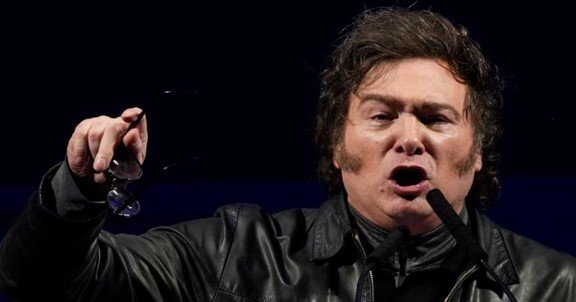
The judicial deadline expires: Milei's government must pay $2.5 billion or enter into contempt to update salaries and university scholarships


The Federal Administrative Court ratified the validity of the University Financing Law (No. 27,795) and set for this Friday at 9:30 a.m. the deadline for the national Executive to transfer the funds. Teachers, non-teachers and students of the 56 national universities are waiting for a retroactive salary recomposition that starts in December 2023, while the Government warns that compliance with the ruling would imply the end of the fiscal surplus.

✍️ By the Editorial Staff of Noticias Universitarias   |   📅 April 17, 2026 |   🕐 Estimated reading time: 8 minutes


🖼️ REFERENCE IMAGE

Federal University March — Plaza del Congreso, Buenos Aires

🔗 See full photo gallery — Infobae / Drone view — University March 2024


⚡ KEY FACTS ABOUT THE CRISIS

📅 Court Deadline: Friday, April 18, 2026 — 9:30 a.m.

💰 Amount ordered:  $2.5 trillion pesos (≈ USD 2,500 million at the official exchange rate)

📜 Law in question:  Law 27.795 — Financing of University Education and Recomposition of Teacher Salary

🏛️ Court:  Federal Administrative Litigation Chamber — Chamber III (Judges Fernández and Morán)

📉 Cumulative wage loss:  32% of purchasing power since November 2023 (≈ 7.3 monthly wages)

🎓 Universities affected:  56 national universities and all their student scholarship programs


🔍 The judicial stopwatch and the cornered government

The national government is facing an ultimatum with no return. This Friday at 9:30 a.m. is the deadline set by the Federal Administrative Court for the administration of Javier Milei to comply with the ruling that ratifies the full validity of the University Financing Law (Law 27,795). The figure at stake amounts to $2.5 trillion pesos, a disbursement that the Executive Branch itself has already described internally as "the death certificate of the zero deficit."

As reported by Infobae with sources from the Executive Branch, from the Casa Rosada they openly recognize that the money "is not there". The responsibility for redistributing the budget items falls on the chief of staff, Manuel Adorni, who will have to find a way to dose a payment that the ruling party considered unaffordable. Despite the legislative defeat that overturned the presidential veto last year and the ratification in both judicial instances, the libertarian administration did not apply the corresponding budgetary funds, deriving the conflict into a judicial labyrinth where it lost in all previous instances.

The amount owed exceeds by about USD 750 million the disbursement from the IMF that Economy Minister Luis Caputo managed to unblock days earlier in Washington, which illustrates the magnitude of the fiscal impact. The last card that the ruling party is considering is to appeal to the Supreme Court of Justice of the Nation requesting suspensive effect, although judicial sources consulted by this newspaper described that possibility as "unlikely" successful.


⚖️ The chain of failures: from the first instance to the Chamber

The origin of the judicial conflict dates back to December 2025, when Judge Martín Cormick, head of the Federal Administrative Court No. 11, granted a collective amparo promoted by the National Interuniversity Council (CIN) and other entities. In that first instance resolution, Cormick stopped Decree 759/2025 with which Milei had suspended the execution of the law, despite the insistence of both chambers of Congress, and considered that said decree presented features of "arbitrariness and manifest illegality".

The magistrate stressed that the Government had justified the suspension of the law by appealing to a norm of lower hierarchy – Article 5 of Law 24,629 – against an express constitutional mandate. Likewise, the judge pointed out that the loss of purchasing power of university professors "continues today, violating labor rights protected by International Human Rights Treaties and by the National Constitution."

The Government appealed, but on March 31, 2026, Chamber III of the Federal Administrative Litigation Chamber – made up of judges Sergio Fernández and Jorge Morán – ratified the precautionary measure, rejected the official arguments and described the Executive's proposals as "not very serious". The chamber members also emphasized that the application of the measure has a limited fiscal impact and does not significantly compromise the public interest. The deadline for compliance was set for 9:30 a.m. on Friday, April 18, 2026.


❝ The loss of purchasing power continues today, violating labor rights protected by International Human Rights Treaties and by the National Constitution. 

— Judge Martín Cormick, CAF Court No. 11, December 2025


📋 What Law 27,795 orders and what the ruling requires

The precautionary measure requires immediate compliance with Articles 5 and 6 of Law 27,795, which establish two major obligations for the Executive Branch:

      Salary recomposition: update of the salaries of teachers and non-teachers of national public universities, covering the inflationary gap accumulated from December 1, 2023 until the full enactment of the law in September 2025.

      Student scholarships: full recomposition and updating of all scholarship programs for students in public higher education, which also suffered a severe deterioration in real terms.

The regulation also contemplates the automatic updating of salaries in accordance with accumulated inflation and establishes that since the transfer of educational competencies to the provinces decades ago, the Nation retains exclusive power over the financing of university education. This singularity makes the universities the only school fund directly under the control of the National Executive, which is why the cut in this sector became an emblem of Milei's "chainsaw" plan.


📊 The Wage Gap in Numbers: Inflation vs. Updates

Indicator

Cumulative percentage (Dec 2023 — Apr 2026)

Accumulated inflation

280%

College Salary Increase Awarded

158%

Difference (Actual Loss)

−122 percentage points

Estimated loss of purchasing power

−32%

Equivalent in lost monthly wages

≈ 7.3 full salaries

Actual drop in transfers to the system (2023–2026)

−45.6%

Source: National Interuniversity Council (CIN) — 2026 Report.

🎤 Voices of the conflict: university, unions and Casa Rosada

The academic community and the teachers' unions celebrated the Chamber's ruling and began to plan a new federal mobilization. Clara Chevalier, president of the National Federation of University Teachers (CONADU), defined the sentence as "very important news that marks a limit for the Government" and called for a march towards a new Federal University March.

The president of the University Federation of La Plata (FULP), Eugenia Sala, ironized about the presidential rhetoric: "Milei likes to talk about 'everything within the law and nothing outside the law'. Well, within the law: more budget for national universities, better salaries for our teachers and non-teachers, and more budget for student scholarships."

The rector of the National University of Rosario and new president of the CIN, Franco Bartolacci, published on his social networks that the ruling represents "a historic decision" and pointed out that what remains is for the Government to comply with the court order.

From the national government, on the other hand, the message was lapidary. Unobjectionable sources from the Executive Branch told Infobae: "Today we are not going to pay. I say this because we really don't have the money." The ruling party also warned that compliance with the ruling will mean a return to the fiscal deficit, an argument that the Executive has been using as a political shield against judicial and parliamentary demands.


❝ Today we are not going to pay. I say this because we really don't have the money. 

— Unobjectionable source of the National Executive Branch, cited by Infobae, April 2026


🔮 Possible scenarios after the expiration of the term

✅ SCENARIO A — Full or partial compliance

Estimated probability:  Medium-high according to government sources

Description:  The government transfers the $2.5 billion through Cabinet Chief Manuel Adorni, reallocating budget items. Possible start of emergency parity negotiations for university teachers.

Fiscal impact:  End of the primary and financial surplus streak; moderate political impact.

Union position:  Suspension of active strikes; monitoring of effective compliance with salaries.


⚠️ SCENARIO B — Appeal to the Supreme Court

Estimated probability:  High according to the ruling party, although judicial sources see it as unlikely

Description:  The Executive files an extraordinary appeal before the Supreme Court requesting suspensive effect to gain time.

Legal viability:  The filing of the appeal does not have automatic suspensive effects. The House could grant them, but the background is scarce.

Risk:  Deepening of the institutional conflict and possible call for a new Federal University March.


🚨 SCENARIO C — Contempt of Court

Estimated probability:  Low, but not ruled out

Description:  The Government ignores the deadline without filing an appeal or making any payment, which constitutes a contempt of court.

Legal consequences:  The judge of first instance could apply astreintes (fines for non-compliance) or refer the case to the Court ex officio.

Political consequences:  Explosive scenario: new mass march, indefinite teachers' strike, institutional crisis.


📅 Chronology of the conflict: from the marches to the Chamber ruling

Date

Milestone

Dec 2023

Asunción de Milei. Beginning of the adjustment on university items.

Apr. 2024

First Federal University March: almost 1 million people in Buenos Aires.

Sep. 2024

Congress approves Law 27,795 on University Financing.

Oct. 2024

Second Federal University March against the presidential veto.

2025 (annual)

Milei issues Decree 759/2025 suspending the application of the law.

Dec. 2025

Judge Cormick orders the application of the law under the protection of the CIN. First precautionary measure.

31 Mar. 2026

The CAF Chamber ratifies the precautionary measure and sets a period of 15 working days.

Apr 18, 2026

Expiration of the judicial term at 9:30 a.m. Decisive day.


🖼️ REFERENCE IMAGE

National Congress Square — Second Federal University March, October 2, 2024

🔗 See full coverage by drone — Infobae — Second Federal University March (Oct. 2024)

🎓 The university system in check: beyond salaries

The conflict over university funding is not only a salary dispute: it is the most visible expression of the tension between the fiscal adjustment model promoted by the Milei administration and the defense of the public higher education system that Argentina built over decades. According to the CIN report, transfers to national universities accumulate a real drop of 45.6% between 2023 and 2026, which puts at risk everything from the payment of basic services to the maintenance of university hospitals, research laboratories and student canteens.

At the beginning of 2026, the Undersecretary of University Policies Alejandro Álvarez and the Secretary of Education Carlos Torrendell met with rectors of the CIN to explore the possibility of promoting a new law that would replace the current one with less fiscal impact. The project did not prosper and the ruling party opted to bet on a favorable resolution in the courts, a strategy that also failed.

The teachers' unions, which are holding active strikes – in what some are already calling the "Japanese-style" modality – are preparing to relaunch the massive call in the style of the historic mobilization of 2024, marked as one of the largest since the return of democracy and the largest suffered by the libertarian administration. The prospect of half a million people back on the streets generates, according to different sources, "anxiety" in some offices of the Casa Rosada.


🔎 Metadata and SEO Optimization of this news


📚 Sources consulted and links verified

      [1] Diario Río Negro — University financing: the deadline for the Government to comply with the law expires — https://www.rionegro.com.ar/politica/financiamiento-universitario-este-viernes-vence-el-plazo-para-que-el-gobierno-de-javier-milei-cumpla-con-la-ley-4542593/

      [2] Infobae — The Government Prepares to Pay $2.5 Trillion and Says "The Deficit Is Back" — https://www.infobae.com/politica/2026/04/16/financiamiento-universitario-el-gobierno-se-prepara-para-pagar-25-billones-y-dice-que-vuelve-el-deficit/

      [3] Profile — Against the clock in La Rosada: the Government must pay 2.5 billion to universities — https://www.perfil.com/noticias/politica/contrarreloj-en-la-rosada-el-gobierno-debe-pagar-25-billones-a-las-universidades-en-menos-de-24-horas.phtml

      [4] Judicial Time — Justice ordered the Government to comply with the university financing law — https://tiempojudicial.com/2026/03/31/la-justicia-ordeno-al-gobierno-cumplir-la-ley-de-financiamiento-universitario-y-actualizar-el-salarial-docente/

      [5] ANRed — Justice ruled in favor of universities and Milei has to apply the Financing Law — https://www.anred.org/la-justicia-fallo-a-favor-de-las-universidades-y-milei-tiene-que-aplicar-la-ley-de-financiamiento-universtario/

      [6] Agencia FARCO — Teachers and students celebrated the Chamber's ruling — https://agencia.farco.org.ar/noticias/educacion-noticias/docentes-y-estudiantes-celebraron-el-fallo-que-obliga-al-gobierno-a-cumplir-la-ley-de-financiamiento-universitario/

      [7] El Ancasti — Justice ordered the Government to pay $2.5 billion — https://www.elancasti.com.ar/politica-y-economia/la-justicia-ordeno-que-el-gobierno-debera-pagar-25-billones-la-ley-financiamiento-universitario-n610479

      [8] Infobae — Gallery: Federal University March from the drone (October 2024) — https://www.infobae.com/politica/2024/10/02/las-imagenes-de-la-multitudinaria-marcha-universitaria-desde-el-drone/


🏛️ This article was prepared with verified journalistic sources.

Textual quotations are attributed to their original sources. The information reflects the status of the conflict as of April 17, 2026.

🔑 TAGS: public universities · university financing · law 27795 · Milei · Teacher salaries · Student Scholarships · CAF Camera · Contempt of Court · Federal March · Argentina 2026

Read more...


The last note

SCIENCE & TECHNOLOGY

────────────────────────────

GRAPHENE

The material that will rewrite the world

────────────────────────────

📅 April 2026 • 🕐 Reading time: approx. 14 min • ✍️ Popular science journalism


🔍 ARTICLE SEO SHEET


SEO title: Graphene: what it is, who discovered it, what it is for and what is its technological future

Meta Description: All About Graphene: Definition, Discoverers, Unique Properties, Current Technology Applications, Investments 2025, and the Fascinating Future of This Carbon Supermaterial.

Main keywords: graphene, what is graphene, properties of graphene, applications of graphene, graphene inversion, Andre Geim, Nobel graphene, graphene future

LSI keywords: nanomaterial, two-dimensional carbon, superconductor, graphene batteries, graphene medicine, graphene transistors, graphene market 2025

Suggested URL: /science/graphene-what-is-future-investment-applications

Schema Markup: Article, FAQPage, HowTo (para propiedades), BreadcrumbList

Search Intent: Informational + Commercial (Investors) — Mixed

Heading structure: Main H1 › H2 per section › H3 for specific subtopics


Imagine a material 200 times stronger than steel, lighter than paper, almost completely transparent, electrically conductive better than copper, and capable of filtering water with unprecedented efficiency. It's not science fiction: it exists, it's called graphene, and it's already changing the world.

Since its successful isolation in 2004 at the University of Manchester, this nanomaterial composed of a single layer of carbon atoms arranged in a hexagonal lattice – identical to a honeycomb – has sparked a scientific, industrial and financial revolution of historic proportions. Today, in 2025, graphene has ceased to be a laboratory experiment to become a global industry valued at almost a billion dollars, with projections that place it at 15,570 million dollars by 2034.

This article answers the essential questions: what is graphene, who discovered it, what is it for, where is it invested today, and what is the horizon of this supermaterial of the 21st century.


🔬  WHAT IS GRAPHENE?

Graphene is a nanomaterial made up of a single layer of carbon atoms bonded together in a hexagonal two-dimensional structure, extracted from graphite – the same material used in writing pencils. Its name comes from "graphite" with the suffix "-ene", typical of carbon compounds.

What makes graphene extraordinary is not simply its composition – carbon is one of the most abundant elements in the universe – but its structure. When carbon atoms are arranged in a single flat atomic-thick layer, physical and chemical properties emerge that no other known material can match simultaneously.


"Graphene is the thinnest material that can exist. If we stacked 3 million layers, it would barely reach 1 millimeter thick."


📊 Technical data: Properties of graphene

PROPERTY / DATA

VALUE / DESCRIPTION

Mechanical resistance

200× stronger than steel; 130 GPa of tensile strength

Electrical conductivity

Superior to copper; electrons at relativistic speeds (~1/300th the speed of light)

Thermal Conductivity

~5,000 W/m·K — the highest known in any material

Optical transparency

Absorbs only 2.3% of visible light — almost completely transparent

Density/Weight

~0.77 mg/m² — lighter than paper

Flexibility

Can bend and stretch up to 20% without fracturing

Specific surface area

~2,630 m²/g — huge contact area per unit mass

Waterproofing

Impervious to all gases and liquids in their intact form

Thickness

0.335 nanometers — the minimum possible according to the laws of physics


🏆  THE DISCOVERY: THE STORY OF SCOTCH ZEAL AND THE NOBEL PRIZE

The history of graphene is, to some extent, the history of an idea that existed in theory decades before anyone could materialize it. Since the 1930s, theoretical physicists have been aware of the existence of individual layers of graphite and their hypothetical properties, but it was believed that it was impossible to isolate them stably at room temperature.

Everything changed in 2004 at the University of Manchester, UK. Physicists Andre Geim and Konstantin Novoselov — both Russian-born — conducted one of the simplest — and most brilliant — experiments in the history of modern science: they used ordinary transparent adhesive tape to rip off successively thinner layers of a block of graphite, until they obtained sheets that were only one atom thick.


"With a piece of graphite and scotch tape, Andre Geim and Konstantin Novoselov changed science forever. In 2010 they received the Nobel Prize in Physics."


The technique, known as mechanical exfoliation or the adhesive tape method, showed that graphene was stable under normal conditions and could be manipulated and studied. The results, published in the journal Science in October 2004, shook the academic world.

Just six years later – a record time in the history of the Nobel Prizes – the Swedish Academy awarded them the Nobel Prize in Physics in 2010 "for their innovative experiments with the two-dimensional material graphene". It was an unprecedented recognition for the speed with which the scientific community recognized the impact of the finding.


👤 The protagonists of the discovery

PROPERTY / DATA

VALUE / DESCRIPTION

Andre Geim

Russian-Dutch physicist (b. 1958, Sochi, USSR). Professor at the University of Manchester. Nobel Prize in Physics 2010. He is also known for his experiments with levitating frogs using magnets (Ig Nobel Prize 2000).

Konstantin Novoselov

Russian-British physicist (b. 1974, Nizhny Tagil, USSR). Collaborator of Geim and co-winner of the 2010 Nobel Prize. The youngest laureate to receive the Nobel Prize in Physics in that century.

University of Manchester

Headquarters of the historical experiment. Today it houses the National Graphene Institute (NGI), inaugurated in 2015, with an investment of £61 million from the British government.

Year of discovery

2004 — published in Science. Nobel Year: 2010.

Theoretical background

P.R. Wallace (1947) calculated the band structure of graphite. P.W. Anderson and other physicists theorized about 2D sheets in the 1960s–1990s.


⚙️  WHAT IS GRAPHENE USED FOR?

Graphene's properties make it useful in an extraordinary number of applications. Its unique combination of strength, lightness, flexibility, conductivity and transparency has no equivalent in any other known material. This has generated an ecosystem of research and innovation that ranges from nanoelectronics to medicine, energy, sports and construction.


⚡ Power and batteries

One of the most promising applications with the greatest commercial impact is its use in batteries and energy storage. Graphene can significantly improve lithium-ion batteries – those found in every smartphone, laptop and electric vehicle – by increasing their energy density, reducing charging times and extending their lifespan.

Pure graphene batteries, still in commercial development, promise full charges in minutes instead of hours, and charge cycles that far exceed those of current technology. Companies such as Samsung SDI and CATL already incorporate graphene oxide into their most advanced cells.

📱 Advanced electronics

Graphene is a serious candidate to replace silicon in next-generation transistors. While silicon faces physical limits in its miniaturization — the so-called "de Broglie barrier" — graphene makes it possible to manufacture atomic-sized transistors with extremely higher switching speeds. MIT and other research centers have succeeded in creating graphene transistors that operate at terahertz frequencies.

In addition, its transparency and conductivity make it the ideal material for flexible touch screens, which could usher in a new era of foldable, rollable, or even wearable devices built into clothing.

🏥 Medicine and biotechnology

Graphene is transforming medical diagnosis. Biosensors based on graphene transistors allow continuous and real-time monitoring of biomarkers in blood, saliva or sweat, with a sensitivity capable of detecting individual molecules. This ability could revolutionize the early diagnosis of cancer, neurological diseases, or viral infections.

In the realm of drug delivery, graphene oxide can function as a vehicle to deliver drugs directly to cancer cells, reducing the side effects of chemotherapy. Researchers at the University of Manchester are also studying its use in neural interfaces to connect the brain with electronic devices.

💧 Water purification

Single-layer graphene is impermeable to water, but its oxide can act as an ultra-selective membrane that filters pollutants, heavy metals, salt, and bacteria. Lockheed Martin developed the Perforene system, a perforated graphene membrane that desalinates seawater with a fraction of the energy required by conventional reverse osmosis systems.

MIT showed that graphene nanopore membranes filter salt 2 to 3 times faster than current technologies. On a planet with increasing water scarcity, this application can literally be vital.

🚀 Aerospace & Defense

The combination of extreme lightness with superior strength makes graphene a strategic material for the aerospace industry. Graphene compounds make it possible to reduce the weight of aeronautical structures by 20 to 30%, improving fuel efficiency and maneuverability. NASA and ESA actively fund research projects in this field.

In defense, graphene is researched for ultralight armor. The company Graphene Composites already markets GC Shield, a ballistic protection technology based on graphene nanoplatelets, used in military and security applications.


"Graphene can be used in everything from tennis rackets and bulletproof vests to quantum transistors and membranes that save lives by purifying water."


🌿 Sustainability and the environment

Graphene has natural antimicrobial properties – its hostility to multiple pathogens has already been documented – which opens up possibilities in sterilizing packaging, sanitary textiles and contact surfaces in hospitals. Likewise, graphene oxide can capture radioactive particles in aqueous suspension, offering innovative solutions for the treatment of contaminated water in areas with nuclear incidents.

In construction, graphene added to cement and concrete can increase their strength by 30 to 40%, reducing the amount of material needed and therefore the carbon footprint of the works.


💰  GRAPHENE INVESTMENTS: THE MAP OF MONEY IN 2025

The global graphene market reached a value of $940 billion in 2025, according to Fortune Business Insights, and is projected to grow to $15.57 billion by 2034, with a compound annual growth rate (CAGR) of 36.60%. These numbers aren't just statistics: they represent one of the biggest materials investment opportunities of the 21st century.

🌐 Institutional and Government Investment

The European Union was a pioneer in betting on graphene at an institutional level: in 2013 it launched the Graphene Flagship initiative with an investment of 1,160 million euros over ten years, making it one of the largest research projects in European history. The project brought together more than 150 research groups from 23 countries.

The UK invested £61 million in the National Graphene Institute in Manchester, which opened in 2015, and continues to be a global benchmark in basic and applied research. China, meanwhile, dominates 70% of the world's graphene production, with massive state support and industrial incentive policies that have made the country the largest manufacturer of the material.

The United States, through DARPA, the NSF, and the Department of Defense, funnels hundreds of millions of dollars annually into graphene projects applied to defense, semiconductors, and energy.

📈 The Capital Market: Companies and Stocks

Investing in graphene through capital markets is possible, but it requires an understanding of the risk profile. Most pure graphene companies are small to mid-cap, in early commercialization stages. Analysts project a CAGR of more than 30% between 2026 and 2033. Here are the most relevant companies in the sector:


COMPANY

PURSE/TICKER

SEGMENT

PROFILE

NanoXplore Inc.

TSX: GRP — Canada

Production at scale

Largest producer of graphene in North America. It supplies the automotive and manufacturing sectors.

Black Swan Graphene

TSXV: SWAN — Canada

Producer + supply chain

It tripled capacity in 2025. Strategic partner of Thomas Swan & Co. (UK). Focused on composites.

Zentek Ltd.

TSXV: ZEN — Canada

Antimicrobial/Health

Develops antibacterial graphene coatings for medical equipment and PPE.

CVD Equipment Corp.

NASDAQ: CVV — U.S.

Manufacturing Equipment

It produces CVD systems to manufacture graphene and 2D materials. Growth of 7.1% in 2025.

Direct Plus PLC

AIM: DCTA — RU

Textile + Environment

It operates in environmental services. Active lines in smart textiles and composites.

First Graphene Ltd.

ASX: FGR — Australia

High Purity Producer

Verified supplier for the cement industry, paints and high-performance composites.

Graphene Manufacturing Group

TSXV: GMG — Canada

Batteries & HVAC

It develops aluminum-ion batteries with graphene and efficient air conditioning systems.


⚠️ Note to the investor reader: the graphene sector is volatile and most of these companies are pre-profitable or in the scale phase. The information provided here is journalistic and informative. It does not constitute financial advice. Always consult a certified advisor before making investment decisions.

📦 ETFs and diversified exposure

For those seeking exposure to graphene with lower individual risk, there is the DMAT (iShares Disruptive Materials) ETF, which includes graphene companies along with other materials critical to disruptive technologies: rare earths, lithium, palladium, copper, and carbon fiber. It has been operating in the US market since January 2022.

The graphene battery market specifically — valued at $244 billion in 2025 — is projected to reach $2.1 billion by 2033, with a CAGR of 31%, driven by vehicle electrification and grid storage.


🖥️  TECHNOLOGICAL APPLICATIONS: FROM THE LABORATORY TO THE PRODUCT

After two decades of intense research, graphene has begun to materialize into real products that can already be purchased or that are in the imminent launch phase. Here's the state of the art for the most advanced technology applications:


    Padel and tennis rackets: In 2013, Novak Djokovic presented the first racket with graphene. Since then, brands such as HEAD and Babolat have incorporated graphene into their premium lines to improve resistance and reduce vibration.

    Tires with graphene: Pirelli incorporates graphene oxide in high-performance tires (Cinturato and P Zero line), achieving lower rolling resistance and greater durability.

    Vests and smart clothing: The British company Vollebak markets graphene-coated T-shirts that improve the conduction of body heat. The University of Exeter developed flexible graphene electrodes that can be integrated into textile fibres.

    Supercapacitors: Graphene supercapacitors can charge and discharge thousands of times faster than conventional batteries, with applications in regenerative vehicle braking and energy peak storage.

    High-frequency transistors: IBM, Samsung, and Intel have developed graphene transistors that operate at frequencies of 100–400 GHz, vastly outperforming silicon for radio frequency applications.

    Nanoscale water filters: Lockheed Martin (Perforene) and startups from the University of Manchester are leading the commercial development of graphene membranes for desalination and wastewater purification.

    Ultra-sensitive sensors: Graphene biosensors capable of detecting concentrations of a single molecule are being evaluated for early diagnosis of lung cancer, cardiovascular disease, and COVID-19.

    Antistatic and anti-corrosion coatings: Graphene as an additive in paints and coatings protects metal structures, pipes and ship hulls with five to ten times greater effectiveness than traditional coatings.

    Next-generation solar panels: Graphene can replace indium-tin oxide (ITO) as a conductive transparent electrode, reducing costs and increasing the efficiency of photovoltaic cells.

    Quantum computing: The magic angle of bilayer graphene, discovered at MIT in 2018 (1.1 degrees of misalignment), turns the material superconducting at ultra-low temperatures, opening up pathways for more stable qubits.


🚀  THE FUTURE: HORIZONS THAT WILL STILL SURPRISE US

Graphene is at a historic turning point. After twenty years of predominantly academic research, the transition to mass industrialization is now unstoppable. The question is no longer whether graphene will transform the world, but when and in what order.


"By 2030 we will know whether graphene is as disruptive as silicon or steel." — Henning Döscher, Fraunhofer ISI / Graphene Flagship


🌐 Convergence with artificial intelligence

The combination of graphene with artificial intelligence is perhaps the most exciting frontier. Neuromorphic chips—processors designed to mimic the human brain—could benefit greatly from graphene's electrical properties to process information with radically lower energy consumption than today's silicon. In a context where AI data centers consume as much electricity as entire countries, this can be a civilizational change.

🧬 Medicine of the future: brain-machine interfaces

Researchers at the National Graphene Institute are working on ultra-thin graphene neural interfaces capable of reading and writing nerve signals with unprecedented precision. Unlike silicon, graphene is biocompatible and flexible, allowing for implants that adapt to brain tissue without causing rejection. Applications range from the treatment of Parkinson's and epilepsy to, eventually, direct interfaces between the human mind and digital devices.

🌍 Clean energy and climate change

On the horizon of the energy transition, graphene can play a decisive role on three fronts: high-density batteries to store solar and wind energy, supercapacitors to manage peaks in demand, and more efficient hydrogen cells. Australian company CSIRO demonstrated that graphene can be produced from soybean oil – a safer and cheaper process than conventional methods – paving the way for truly mass and sustainable production.

⚠️ Pending challenges: the dark side of sleep

The path of graphene is not without obstacles. The main challenges that the industry must overcome are production at scale with consistent quality – defects in the crystal structure affect its properties – the still high cost of high-purity graphene, and integration into established value chains that have been committed to silicon, aluminum and plastic for decades.

At the safety level, the scientific community is actively studying the impact of graphene on living organisms: although graphite is harmless, graphene nanoparticles could have unwanted biological effects if inhaled or ingested in large quantities. International regulation – led by organisations such as the OECD and the EU – is moving in this direction with caution and rigour.


📅 Estimated timeline of mass adoption

PROPERTY / DATA

VALUE / DESCRIPTION

2025 – 2027

Commercial consolidation in composites, tires, paints, consumer electronics and high-end sports equipment.

2026 – 2028

First mass deployment in EV batteries with graphene oxide. Graphene membranes in industrial water purification plants.

2028 – 2031

Graphene transistors in cutting-edge semiconductors. Commercial biomedical sensors. Smart textiles with graphene in the mass market.

2030 – 2035

Graphene in quantum computing. Clinical neural interfaces. Partial replacement of silicon in AI chips.

Post 2035

Speculative horizon: self-repairing buildings, superconducting power grids, ultralight spacecraft, and massive brain-machine integration.


🎯  CONCLUSION: THE MATERIAL THAT IS ALREADY HERE

Graphene is not a promise of the distant future. It's a material that's already in your car's tires, in your neighbor's padel racket, in the next-generation batteries that will determine who wins the electric vehicle race, and in the most advanced labs on the planet quietly working on cures for diseases that today have no treatment.

Its story — from a piece of duct tape in Manchester to a multibillion-dollar industry — is also the story of how basic, seemingly abstract science can transform the world in less than a generation.

Andre Geim and Konstantin Novoselov were not looking to become millionaires when they exfoliated that first graphene sheet in 2004. They sought to understand nature. And in doing so, they opened a door that no human force can close.


"Graphene is not the material of the future. It is the material of the present that we still do not fully understand."


  FREQUENTLY ASKED QUESTIONS — FAQ

Is graphene dangerous to health?

Graphene itself is non-toxic under normal conditions of use. However, nanoparticles inhaled in industrial settings can be problematic. Developing international regulations will set safe exposure limits.

How much does graphene cost today?

The price varies greatly depending on the quality and shape: graphene powder (nanoplatelets) can cost between 50 and 500 USD/kg for industrial use. High-purity graphene (monolayer for electronics) can exceed 100,000 USD/m².

Where can I buy graphene stocks?

The main graphene stocks are listed on Canadian (TSX, TSXV), Australian (ASX) exchanges and the London AIM market. In the US, the DMAT ETF offers diversified exposure. Always consult a financial advisor before investing.

When will pure graphene batteries arrive in smartphones?

Analysts estimate that the first graphene batteries with massive commercial scale in consumer electronics will arrive between 2026 and 2028. Chinese companies have already presented prototypes with charging times of 8 minutes for a full charge.

Can graphene replace plastic?

Partially. Graphene composites can replace plastics in high-performance applications where strength, conductivity or extreme lightness are required. It is not a universal substitute for plastic in everyday uses, at least for the time being.


📚  SOURCES AND REFERENCES

This article was prepared with information from the following verified sources:


    MIT Technology Review — Research on Multilayer Graphene and Quantum Computing (2024)

    MAPFRE Global Risks — "Graphene: a material of the future that is already revolutionizing the present" (May 2025)

    Fortune Business Insights — Graphene Market Size, Share, Growth Analysis Report (2025)

    MarketsandMarkets — Graphene Market worth $3.58 billion in 2030 (2024)

    Graphene Flagship (UE) — Roadmap Briefs y estudios de mercado (2021–2025)

    Fraunhofer ISI, Karlsruhe — Thomas Reiss, Market Penetration Studies

    Grand View Research — Graphene Market CAGR 35.1% forecast 2024–2030

    Nature / Carbon / Science — Original publications by Geim & Novoselov and UFMG team

    Investing News Network — Graphene Stocks Report (febrero 2026)

    Bullish Bears / Intellectia.ai — Graphene Stock Analysis (2025–2026)


────    ────

#grafeno  #nanomateriales  #cienciaytecnologia  #innovacion  #futurismo  #Nobel  #supermaterial

Read more...

Published on 16/04/2026 » 16:16  - none comment -   |     |