


Blog - ArchivesPosts of 09/2023
 User Epistemology
- by
cronywell
User Epistemology
- by
cronywell
“Culture is the vital system of ideas at all times. It doesn't matter that these ideas or convictions are not, in part or in whole, scientific. Culture is not science. It is characteristic of our current culture that a large portion of its content comes from entertainment; But in other cultures, it was not like that, nor is it said that in ours it is always like that to the same extent as now. This leads us to confirm that the great majority do not possess the vital system of ideas about the world and man corresponding to time. That average character is the new barbarian, behind his time, archaic and primitive compared to the terrible present. Today we are all technology users, but what percentage of the population is capable of manufacturing a cell phone, for example, or simply understanding exactly how its components work, not just their normal use. Are there teachers capable of explaining each of the parts that make it up and how they work, from the circuit, the battery, the display? If we want to be an advanced country, we must acquire the technological Know How of everything we use today. “To be able to research, develop, national technology.
” Platon said it 420 years a/c “KNOWLEDGE WILL MAKE YOU FREE”.
In the next national elections, to take place on October 22 (General) and eventual second round on November 19, Argentines will elect:
President and Vice President
19 Mercosur parliamentarians by national district
24 Mercosur parliamentarians by regional district
130 national deputies throughout the country
24 national senators in 8 provinces.
Political parties and Alliances that nominate national candidates.
La Libertad Avanza - Javier Milei - Victoria Villarruel
Juntos por el Cambio - Patricia Bullrich - Luis Petri
Unión por la Patria - Sergio Massa - Agustín Rossi
Hacemos por Nuestro País - Juan Schiaretti - Florencio Randazzo
Frente de Izquierda y de Trabajadores – Unidad - Myriam Bregman - Nicolás del Caño
Clic en los Partidos para acceder a las propuestas - Clic en los nombres para saber sobre los candidatos.
Inhabilitados. No superaron el 1,5% de los votos en las paso.
Principios y Valores -
Movimiento Libres del Sur
Nuevo Movimiento al Socialismo
Movimiento Izquierda Juventud Dignidad
Política Obrera
Frente Patriota Federal
Movimiento de Acción Vecinal
Frente Liber.AR
Proyecto Joven
Increased meat
If meat continues its upward trend, supermarkets will change their location, and butcher shops, instead of being at the bottom, will be at the entrance.
The issue of multipolarity was addressed in one way or another in the works of IR specialist David Kampf (in the article “The emergence of a multipolar world” [“The emergence of a multipolar world”]), the historian of the University Yale scholar Paul Kennedy (in his book The Rise and Fall of Great Powers), geopolitician Dale Walton (in Geopolitics and the Great Powers in the XXI century: Multipolarity and the Revolution in strategic perspective” [Geopolitics and Great Powers in the 21st Century: Multipolarity and Revolution from a Strategic Perspective]), American political scientist Dilip Hiro (in the book After Empire: Birth of a multipolar world [After Empire: The Birth of a multipolar world]), and others.
The closest to understanding the meaning of multipolarity, in our opinion, was the British IR specialist Fabio Petito, who tried to build a serious and well-founded alternative to the unipolar world on the basis of Carl Schmitt's legal and philosophical concepts.
The “multipolar world order” is also repeatedly mentioned in the speeches and writings of influential politicians and journalists. For example, former Secretary of State Madeleine Albright, who first called the United States the "indispensable nation," declared on February 2, 2000 that the United States does not want to "establish and enforce" a unipolar world, and that integration economics had already created “a certain world that can even be called multipolar”. On January 26, 2007, in The New York Times editorial column, it was openly written that the "emergence of a multipolar world," along with China, "now takes its place at the table in parallel with other centers of power such as Like Brussels or Tokyo. On November 20, 2008, in the report "Global Trends 2025" of the US National Intelligence Council, it was indicated that the appearance of a "global multipolar system" should be expected within two decades.
Since 2009, US President Barack Obama has been seen by many as the harbinger of an “era of multipolarity”, believing that he would shift US foreign policy priority towards emerging powers such as Brazil, China, India and Russia. On July 22, 2009, Vice President Joseph Biden said during his visit to Ukraine: "We are trying to build a multipolar world."
The bipolar world was based on the symmetric comparability of the potential economic and strategic-military parity of the US and Soviet warring sides. At the same time, no other country affiliated with a particular camp had even remotely comparable cumulative power to that of Moscow or Washington. Consequently, there were two hegemon [hegemonic powers] on a world scale, each surrounded by a constellation of allied countries (half-vassals, in a strategic sense). In this model, formally recognized national sovereignty gradually lost its weight. In the first place, the associated countries, whether they belonged to one or the other hegemon, were dependent on the policies of that pole. Therefore, these countries were not independent and regional conflicts (generally developed in Third World areas) quickly escalated into a confrontation between two superpowers seeking to redistribute the balance of planetary influence in the “disputed territories”. This explains the conflicts in Korea, Vietnam, Angola, Afghanistan, etc.
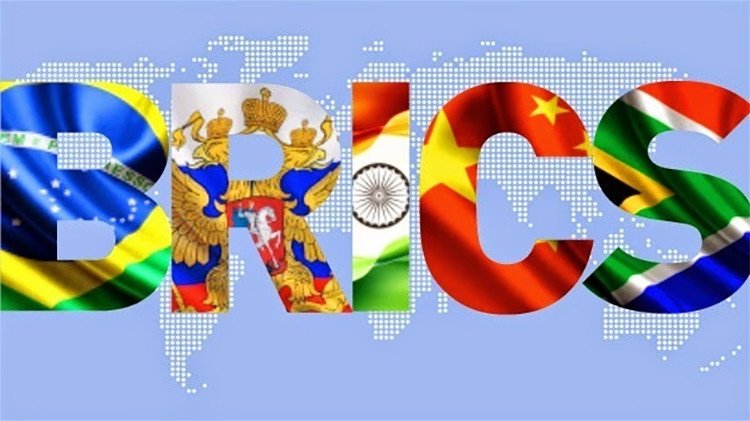
To understand the new world order, it must be taken into account that there are several nations and institutions that make up power blocks. China, the European Union, the BRICS countries and the OAS are some of the new actors in international politics. Apart from these nations, institutions or blocs, we must not forget that there are other centers of power: lobbies, multinationals, NGOs, social movements or networked communities.
On the other hand, multipolarity has to be associated with the phenomenon of globalization. Analysts and geopolitical experts affirm that in the coming years China will be the first superpower, Brazil's economy will go from ninth to fourth place internationally and countries like Mexico, Vietnam or Indonesia could develop significantly.